The Autumn of Secrets and the Assassination of the Dream of Motherhood
 Dr. Abdulqawi Al-Qadasi · 4 min read
Translated from the Arabic. Read the original (العربية)
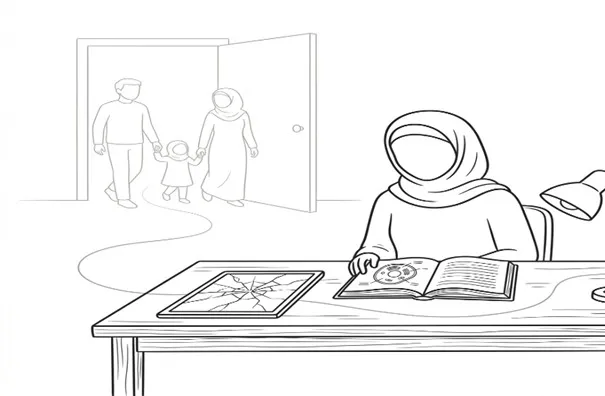

A woman may forgive poverty, she may endure illness, she may overlook many of the faults of married life, if she finds honesty and loyalty. But there are wounds that do not heal, because they touch not only the feelings but extend to the rights rooted in fitrah (innate human nature) on which the marriage contract was founded.
This is a true story, in which the names and some details have been changed to protect privacy, but it carries a message worth telling.
In the corridors of a university, a love story grew between a university professor named Musa and his colleague Maryam. Musa was married and had children, and as time went by, admiration turned into a sincere wish to be joined together. After some hesitation and reluctance at first, Maryam was persuaded to marry him as a second wife, believing that polygyny, when built on justice and clarity, could be a stable life for both sides.
The marriage took place, he rented her a separate home, and they lived for years that seemed, on the surface, calm and settled. Musa showered her with attention, and she saw in him the man with whom she deserved to begin a new page of her life; and she waited, as every wife waits, for God to grant her a child who would fill the house with life.
But at the end of the first year of the marriage, Musa took a grave decision without her knowledge. He travelled to another country and had a surgical operation to cut the vas deferens (a vasectomy), intending permanent sterilisation, because he considered that his children by his first wife were enough and did not want to bear the responsibility of other children.
He did not tell his second wife, did not consult her, and did not leave her the right to choose.
He went back to his normal life and kept showing affection and attention, while she waited for pregnancy year after year and asked about the reasons for the delay. He comforted her with gentle words and left her to live on a hope that never truly existed.
Ten years passed.
Ten years of waiting.
Ten years of postponed dreams.
Ten years during which she believed that it was fate that denied her motherhood, while the truth lay hidden in a drawer of his desk.
One day, as she was sorting some of his old papers, she came across medical reports and tests. After having them translated and understanding what they said, she discovered the truth that shook her whole world.
The delay of pregnancy had not been a decree of unknown cause.
It was a decision her husband had taken alone from the beginning of their marriage.
She confronted him, hardly believing what she had read.
She said to him, her tears struggling against her words:
“How could you deceive me all these years? How could you deprive me of the right to motherhood without even giving me the chance to choose?”
He tried to justify his position, spoke of his circumstances, of his responsibility towards his children, of his fear of heavier burdens, but all those justifications came far too late.
The problem was not in his wish not to have children.
It was that he had confiscated her right to make the decision.
Maryam gathered her belongings and left the house, never to return.
The effects of the shock did not stop at the limits of the divorce; the university itself began to remind her of the years of deception. She could no longer bear to pass through the corridors that had witnessed the beginning of their story, so she resigned from her academic post and chose to begin a new life far from the whole place, despite the scholarly and professional standing she enjoyed.
The family intervened and mediators multiplied, but once trust has collapsed in this way, repairing it comes close to the impossible.
It Is Not Only a Question of Having Children
Two spouses may, by their shared will, choose not to have children; they may decide to postpone it; or health or social circumstances may lead them to it. All of this is a legitimate right if it rests on mutual consent and clarity.
But when one party acts alone in a decision that touches the family’s future, and then conceals it for many years, the issue is no longer about children; it is about trust, faithfulness and an original right to take part in the decision.
Marriage is not a contract of ownership but a contract of partnership.
Neither spouse has the power to confiscate the fundamental rights of the other in the name of love, interest or personal comfort.
When Selfishness Becomes Betrayal
Selfishness does not begin with shouting; sometimes it begins with a silent decision.
A decision taken in secret, upon which another person’s future is then built without her knowledge.
This is among the gravest forms of injustice within married life, because the victim is not deprived of something material that could be compensated, but of years of her life that can never be recovered.
Many wounds may heal with time, but stolen years do not return.
A Final Word
The success of polygyny does not rest on financial capacity alone, nor on the distribution of nights, but before all that on honesty, transparency and respect for rights.
A husband who wants to keep his wife’s affection by hiding the facts is demolishing his house with his own hands, even if at first it seems to him that he has succeeded in hiding the secret.
Many words may be forgotten and many mistakes forgiven, but deception over fateful rights leaves a wound that does not heal, and turns the loveliest of beginnings into a long autumn of secrets, and a silent assassination of a dream that could have been the finest thing in life.
A story from the book: Behind the Veil of Polygyny (Polygyny and Anecdotes of Those Who Practise It) by Dr Abdulqawi Al-Qadasi
Related service: Second marriage and polygyny counselling
Questions people hesitate to ask
Can one spouse decide alone not to have children?
As the article puts it, a couple may jointly choose not to have children or to delay them, and that is a legitimate right when based on mutual consent and clarity. But when one spouse alone takes a decision affecting the family's future and then hides it, the issue becomes one of trust and a fundamental right to decide.
What does successful polygyny rest on?
Successful polygyny does not rest on financial ability alone or on dividing the nights, but first on honesty, transparency and respect for rights. A husband who tries to keep his wife's affection by hiding the truth is destroying his home with his own hands, even if he seems at first to have kept the secret.
Share your thoughts
Have you been through something like this, or has a question come to mind? Write it here. Your words may help another reader.
No comments yet. Be the first to start the conversation.