Does Education Prolong Our Childhood?
 Dr. Abdulqawi Al-Qadasi · 8 min read
Translated from the Arabic. Read the original (العربية)
When the education system delays our children’s readiness for life
When does a person become able to bear responsibility? And does he really need twelve years of general education, followed by four or five years at university, and perhaps further years of postgraduate study, before he is qualified to contribute to life, work and production?
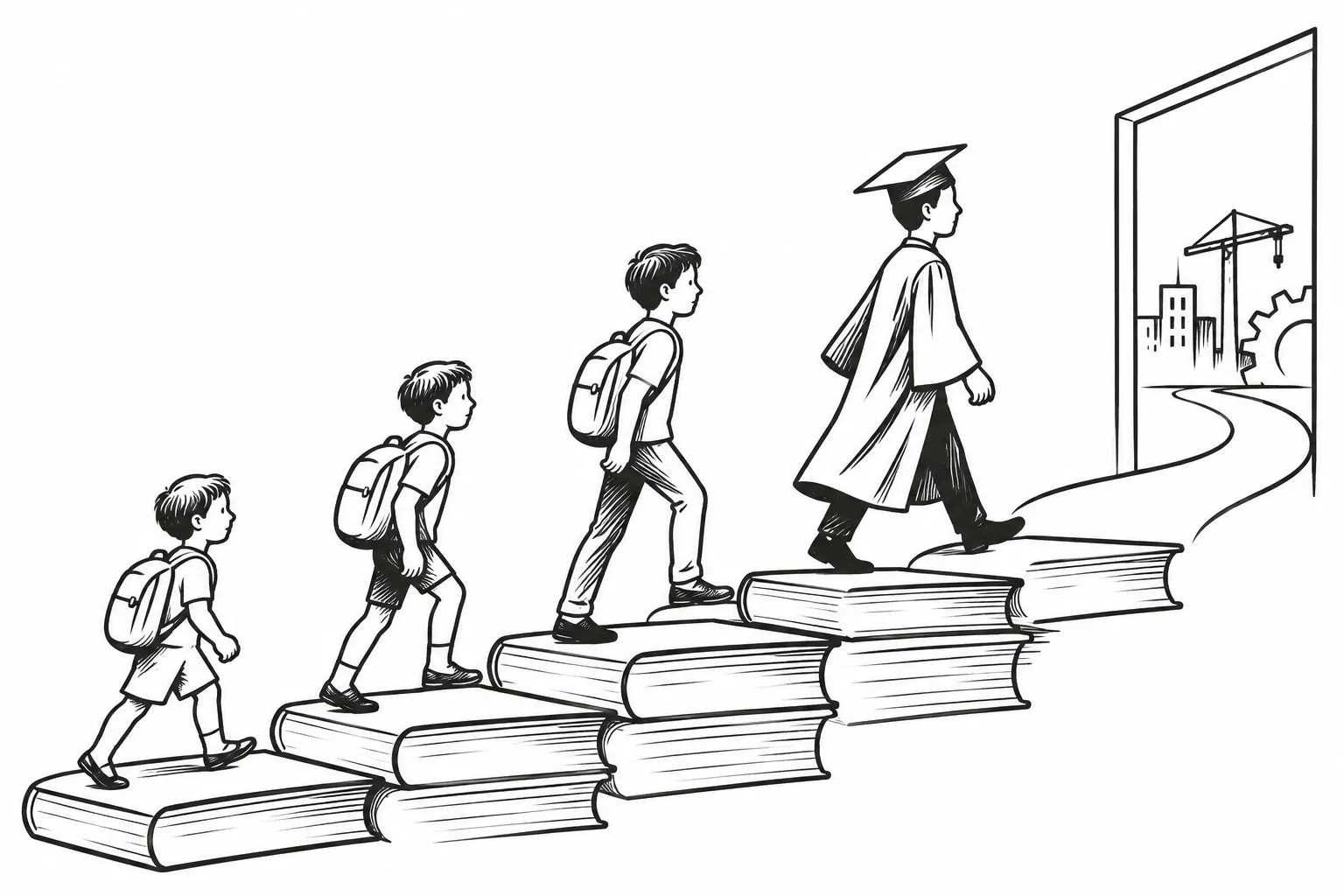
Our children enter school at the age of five or six, and remain in general education until roughly seventeen or eighteen. Many of them then move on to university, graduating at twenty-two or twenty-three, and their educational journey may stretch into their late twenties. Only after that do some of them begin looking for a job, as if long years of their lives had been merely a preparation for life, not part of it.
The problem does not lie in the length of learning as such; learning should continue throughout life. It lies in the fact that our education system often makes the transition to responsibility, work and specialisation conditional on completing specified years and stages, instead of linking it to the knowledge, competence and maturity a person has actually acquired.
When does childhood end?
In our Islamic heritage, puberty is linked to a person’s transition to the stage of religious accountability, with consideration given to reason, ability and capacity. Puberty may occur at different ages, so not all children mature at the same time. Yet religious accountability does not necessarily mean that every aspect of psychological and social maturity is complete, or that legal and professional capacity has been attained in every matter.
In the modern era, the Convention on the Rights of the Child treats those under eighteen as children, with the exception it makes regarding the age of majority under national laws. This is a legal definition intended to protect and guarantee rights, and it does not mean that everyone under this age is equal in abilities and readiness.
As for mental, psychological and social development, it does not happen all at once at a particular age; it develops unevenly among individuals, and some of its aspects may continue beyond eighteen.
But the question that concerns us here is not: when are all aspects of maturity complete? It is: should we postpone assigning responsibilities and developing independence until a person reaches a fixed age, even if the ability and readiness appear in him earlier?
Did we bear responsibility earlier?
I remember our childhood in a village in Taiz, when we studied and worked and shared in our families’ affairs, bearing responsibilities suited to our abilities while we were still in primary or preparatory school. Reaching secondary school meant, in the eyes of society, that a young man had travelled a considerable distance towards maturity and responsibility.
I am not calling here for a return to all the practices of the past, or for loading children with burdens beyond their years. I am recalling an important aspect of that experience: that learning was not separate from life, and that school was not the only place where a person’s character and abilities were shaped.
I remember that I began teaching while I was still a student, in the ninth grade or before, when I taught a group of children. After graduating from secondary school, I took up teaching at a government school, teaching secondary-school students, some of whom were close to my own age, with only a year or two separating me from some of them.
Even so, the closeness in age was no obstacle to carrying out my task. Rather, a distinctive educational relationship grew between us, and we engaged together in learning, activities and teamwork. That experience taught me that responsibility itself can be a means to maturity, and that trust in young people, when combined with preparation and guidance, can reveal abilities that do not appear if they remain mere recipients waiting their turn.
In our Islamic history, there stands the example of Usama ibn Zayd, may God be pleased with them both, to whom the Prophet ﷺ entrusted the command of an army when he was a young man of about eighteen, according to a number of historical accounts. The significance of the example is not that every young man of this age is fit to lead, but that young age was not an absolute barrier to entrusting a great responsibility to one whose fitness for it had become evident.
Can an eighteen-year-old become a doctor, an engineer or a teacher?
Some may object: do you want a young man of eighteen to become a doctor, an engineer or a teacher?
My answer is: why do we let age alone settle this question?
Aptitudes and abilities differ among people. Some young people may reach advanced competencies at an early age, while others need longer. It is not right to impose the same length of time on everyone merely because we are used to organising education this way.
But that does not mean that having advanced cognitive abilities is enough, on its own, to practise any profession. Medicine, engineering and other sensitive professions require specialised knowledge, practical training, professional judgement, independent assessment, and the fulfilment of safety and licensing requirements. These requirements must not be cut short at the expense of people’s lives and rights.
What we should review is not the standards of professional competence, but the assumption that reaching them can only happen through a fixed number of years, in the same order of study, for all people without exception.
If a learner can prove that he meets the approved academic, practical and professional requirements in a shorter time, why do we oblige him to wait until the period set for others has ended? And conversely, if another needs additional years, why do we count that as failure?
When general education becomes an obstacle to talent
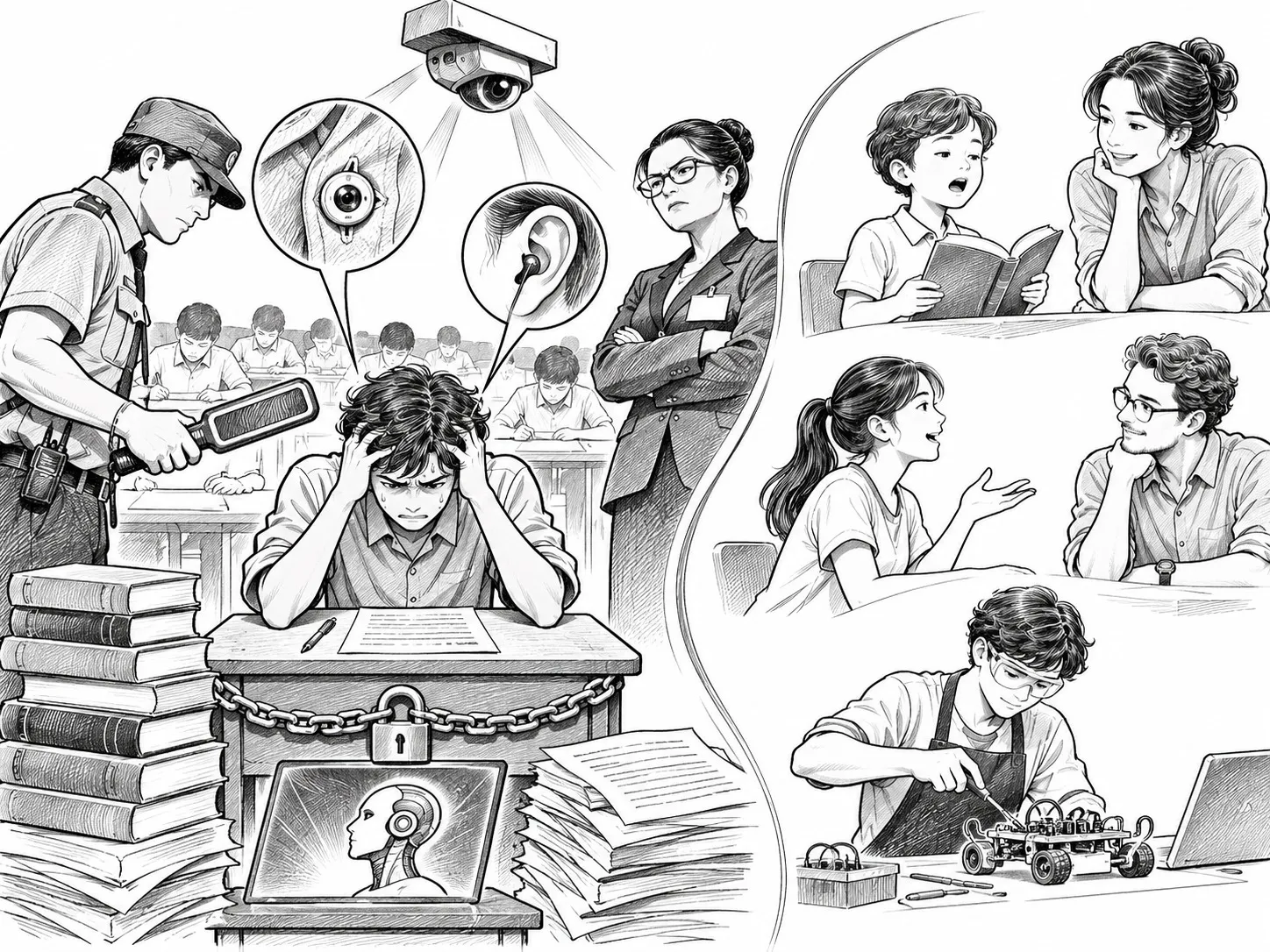
Among the problems I see in our education system is that, for many long years, we oblige learners to study a wide range of subjects according to nearly uniform timetables and requirements, despite the differences in their abilities, inclinations and interests.
One may have a clear talent for engineering or technology, yet stumble in some subjects that are not his area of strength. Another may excel in literature, the arts or crafts, yet find himself forced to go through the same academic path as someone who wants to specialise in the natural sciences.
I do not mean by this that we can do without general culture, language, arithmetic, or shared values and skills; these are necessary for building the person, and early specialisation should not turn into deprivation of basic knowledge or a closing of the doors of the future.
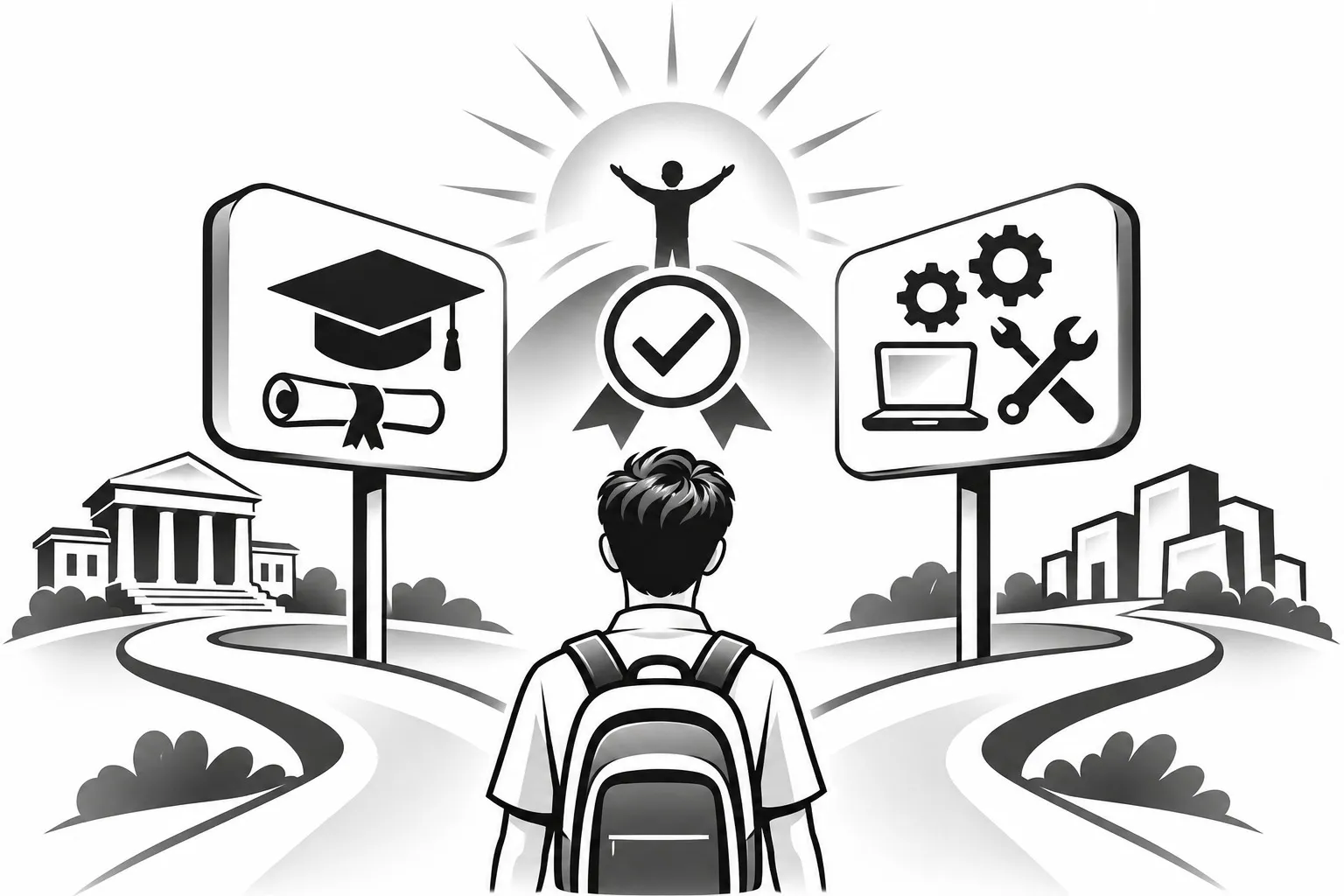
But why do we not secure these foundations in a shared and flexible foundational stage, during which we discover the learner’s abilities and inclinations, and then allow him to move on to pathways suited to his aptitudes, while upbringing and general knowledge continue and the path can be changed later?
Part of academic stumbling may not be the result of a weak ability to learn, but of the unsuitability of the path imposed on the learner. And when a person finds the field that fits his abilities and interests, he may advance in it faster and more deeply.
Here the question is no longer: how many years should he stay in school? It becomes: what should he master, and what opportunities does he need to achieve that?
Learning does not happen in school alone
Beyond that, we need to review our very concept of education.
A person learns in school and university, but he also learns in the factory, on the farm, in the workshop, in the market and at the workplace, and from reading, experience, observation and interaction with others.
Whoever learns to drive a car, maintain a device, manage a project or practise a craft has acquired real knowledge and skill, even if he did not obtain it inside an educational institution.
This does not mean that every experience is enough on its own to earn a professional qualification; competencies differ in nature and level, and some need careful assessment and official licensing. But it is wrong to ignore learning merely because it happened outside school.
Hence the importance of recognising actual competencies, and of giving people the opportunity to prove what they know and what they can do, regardless of the institution in which they learned or the time it took.
An education system that prepares people for life while they live it
In my book The Theory of Upbringing and Education: Towards Rebuilding the Education System, I start from a different vision, based on a shared and flexible foundational stage, followed by multiple pathways suited to learners’ abilities and inclinations, in which progress rests on mastery, not on completing school years alone.
Upbringing does not stop at the end of the foundational stage; it continues in all pathways, with what it involves of building values, character, responsibility and social awareness.
In this vision, we do not want to push children into work before their time, or to deprive them of their childhood and their rights to play, learning and protection. Nor do we want to reduce a person’s worth to his economic productivity.
Rather, we want a system that prepares our children gradually for life, and gives them real opportunities to practise responsibility, learning and work appropriate to their ages and abilities, without making study a barrier that separates them from society.
Some of them may reach an advanced level of competence at an early age, while others need longer, and both should find in the system what responds to their needs.
We do not want to shorten childhood; we want not to prolong dependency in the name of education, and not to delay young people’s launch into life merely because they have not completed a fixed number of school years.
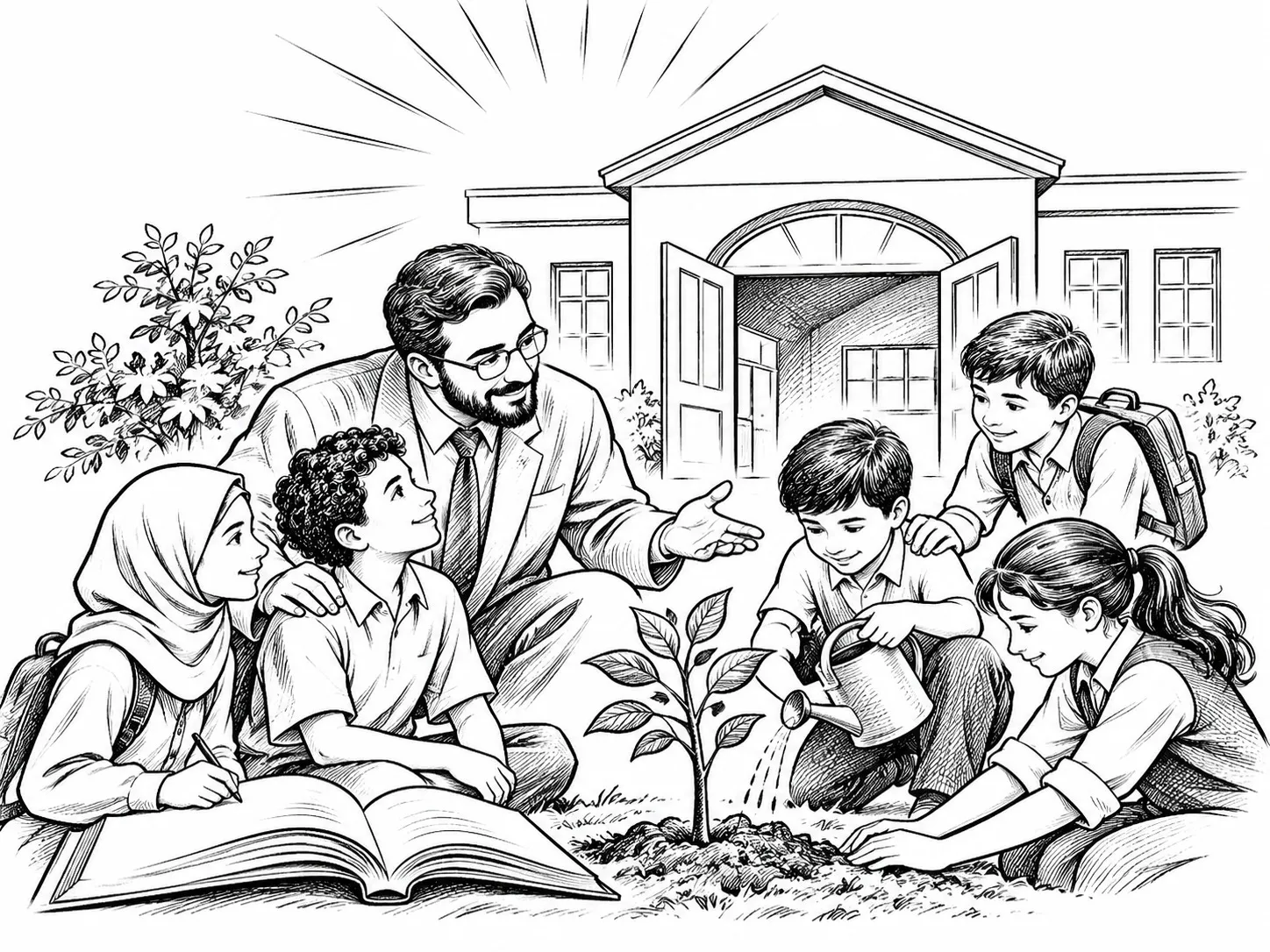
The school we need is not the one that keeps our children for as long as possible, but the one that helps them discover themselves, develop their abilities and take on responsibility gradually, and that opens before them the doors of learning, work and creativity throughout their lives.
Perhaps the question we should ask today is not: why do our children not stay in education for longer?
But rather: why do some of our children need all these years before we allow them to prove what they can do?
Related service: Parenting and education counselling
Questions people hesitate to ask
Do long years of schooling delay children taking on responsibility?
The article notes that children may spend from age five to their late twenties in education, as if those years were only preparation for life rather than part of it. The author recalls village life in Taiz, where children studied, worked and took on responsibilities suited to their abilities, and his own experience of teaching while still a student, to argue that responsibility itself builds maturity when paired with preparation and guidance.
Can an 18-year-old become a doctor or an engineer?
The article argues that age alone should not settle the question, but stresses that sensitive professions such as medicine and engineering require specialised knowledge, practical training, independent assessment and licensing, which must not be cut short. What should be reviewed is the assumption that competence can only be reached through a fixed number of years, in the same order, for everyone.
Does progress by mastery mean putting children to work early?
No. The article says it does not want to push children into work before their time, deprive them of their rights to play, learning and protection, or reduce a person's worth to productivity; it wants a system that prepares them gradually for life with responsibilities and work suited to their ages and abilities.
Share your thoughts
Have you been through something like this, or has a question come to mind? Write it here. Your words may help another reader.
اسعد الله قلبك