Where Did You Study? Or What Do You Know?
 Dr. Abdulqawi Al-Qadasi · 4 min read
Translated from the Arabic. Read the original (العربية)

Towards an education system that recognises competences, not just certificates
When someone applies for a job or wants to continue his studies, we are used to asking him first: where did you study? What certificate do you hold? And how many years did you spend in education?
But we rarely begin with the more important question: What do you know? And what can you do with what you know?
There is nothing wrong with asking about the certificate; certificates and educational institutions have played an important role in organising education and documenting attainment, and have helped build trust between institutions and society. But the problem begins when the certificate turns from a means of inferring competence into a substitute for verifying it, and when the path a person took in learning becomes more important than what he actually learned.
The modern education system was built on successive stages, grades and school years, in which the learner moves from one level to another until he obtains a certificate that allows him to continue his studies or enter the job market. This system has achieved great things, widened educational opportunity, and helped spread and organise knowledge.
Yet the world in which this system arose is no longer the world we live in today.
Knowledge is no longer confined to the school textbook, and the school and the university are no longer the only sources of learning. Today a person can learn programming through digital platforms, gain professional skills in the workplace, and develop his research and technical abilities through self-learning, practice and experimentation.
Here a fundamental question arises: If a person has acquired real competence outside the educational institution, why do we not recognise it whenever he is able to prove it?
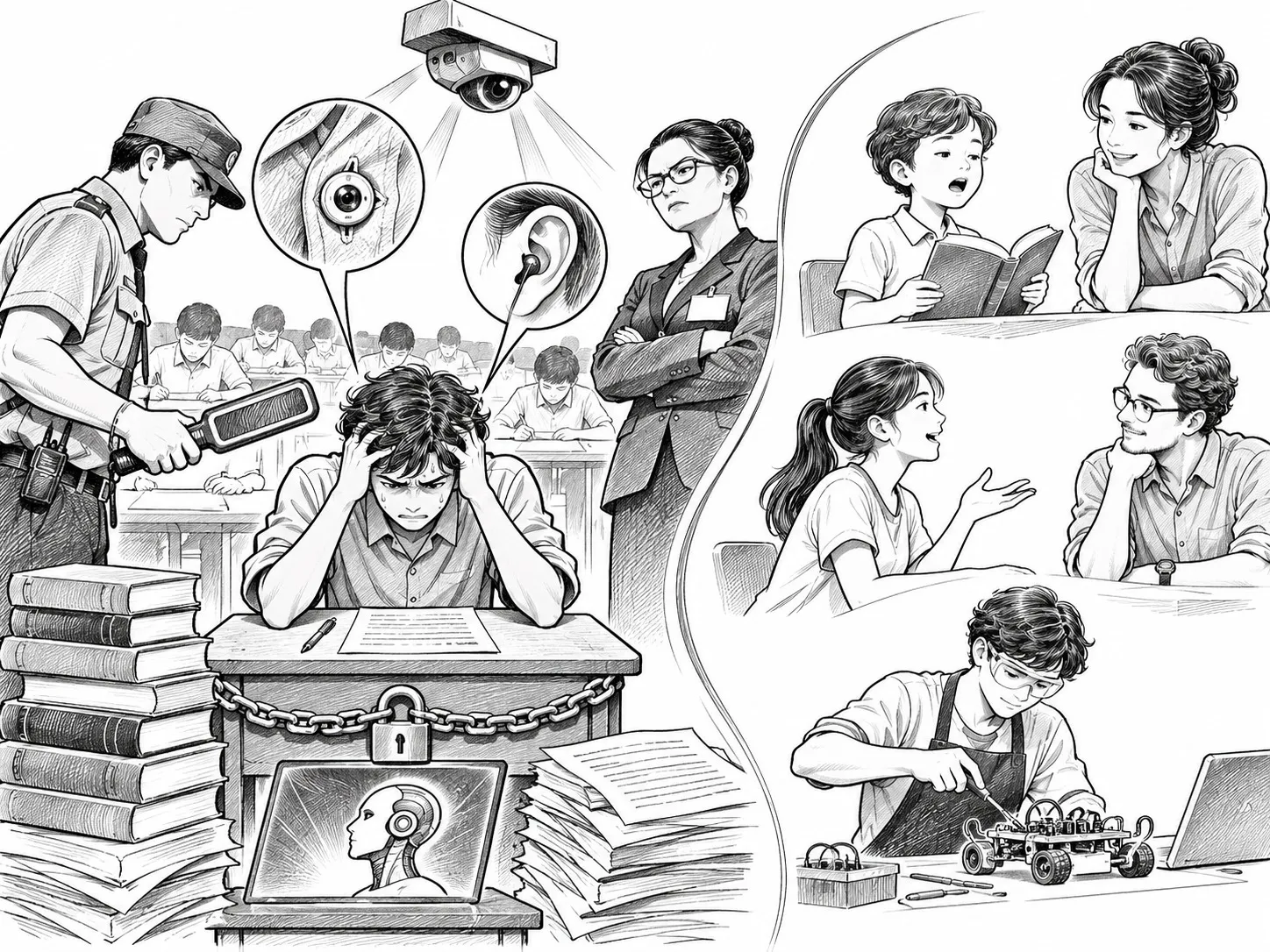
Imagine two young men applying for a job in a technical field. The first holds a university degree but does not possess the required practical skills at a sufficient level. The second taught himself, completed real projects and gained advanced experience, but does not hold the required certificate.
In many cases, the second may be excluded before he is given a chance to prove his abilities, simply because he did not follow the usual educational path.
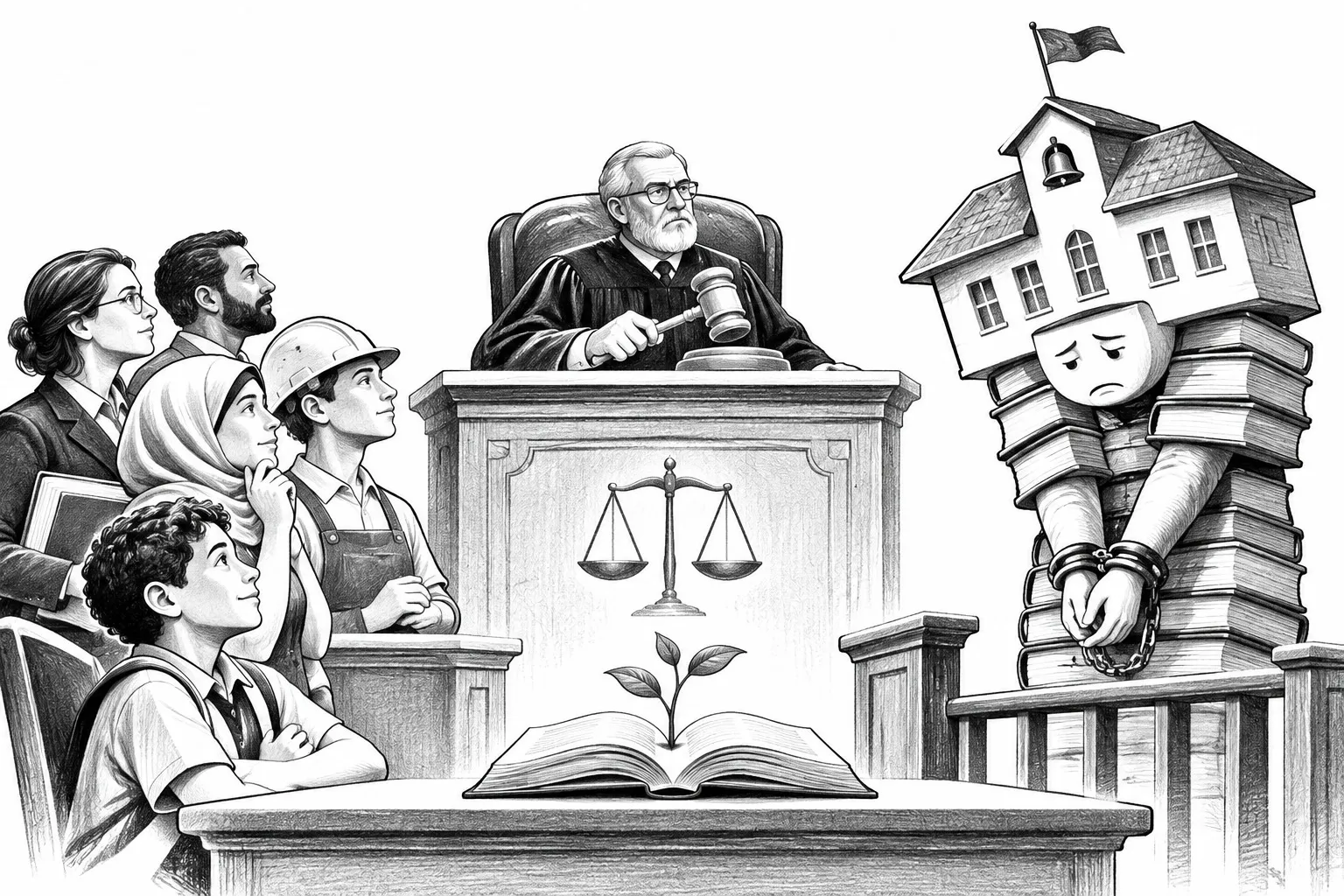
The problem here is not the existence of certificates, but making them the only path to recognising knowledge and skill.
From this starting point, the theory of upbringing and education that I put forward in my book “A Theory of Upbringing and Education: Towards Rebuilding the Education System” calls for reconsidering the relationship between learning, assessment and the recognition of competences.
Learning is a broad and continuous process that can happen inside school and outside it, at university and in the workplace, and through experience, research and practice. Assessment, on the other hand, is a process of verifying what a person has acquired in knowledge, understanding and ability to perform.
For this reason the theory proposes distinguishing between the body that provides education and the body that verifies competences, so that recognising what a person has learned is not necessarily conditional on where he learned it or how long he spent there.
This does not mean that everyone who claims to have a skill deserves recognition for it; on the contrary, this vision requires building a reliable assessment system based on clear standards, suitable tools and independent bodies that are themselves subject to quality assurance and accountability.
A doctor is not sufficed by theoretical knowledge without verification of his ability to practise safely; an engineer is not sufficed by memorising laws without the ability to apply them; and a teacher's competence is not proven merely by passing education courses, but by his ability to teach, to bring up, and to make a real difference to his students' learning.
In this way, proven competence becomes the basis of recognition, taking into account the nature of each specialisation and the level of responsibility attached to it.
This shift also opens the door to reconsidering school time. Why are all learners bound to the same duration, despite the differences in their readiness and speed of learning? And why does a student repeat a whole school year if he stumbles in one specific competence while having mastered the rest?
Progressing by mastery, rather than relying merely on the passage of time, can make education more flexible and fair, giving the learner extra time where he needs it without holding back his progress in what he has mastered.
Even so, rebuilding the education system does not mean abolishing the school, the university or the certificate, nor denying the historic achievements of the existing system. It means preserving what has proven its value, reorganising what is no longer suitable, and developing the relationship between education, assessment, work and life.
The state remains responsible for guaranteeing the right to education, achieving fairness and quality, setting standards and regulating the recognition of qualifications. But providing learning opportunities can be shared by many institutions, as long as they are subject to clear rules that guarantee the rights of learners and of society.
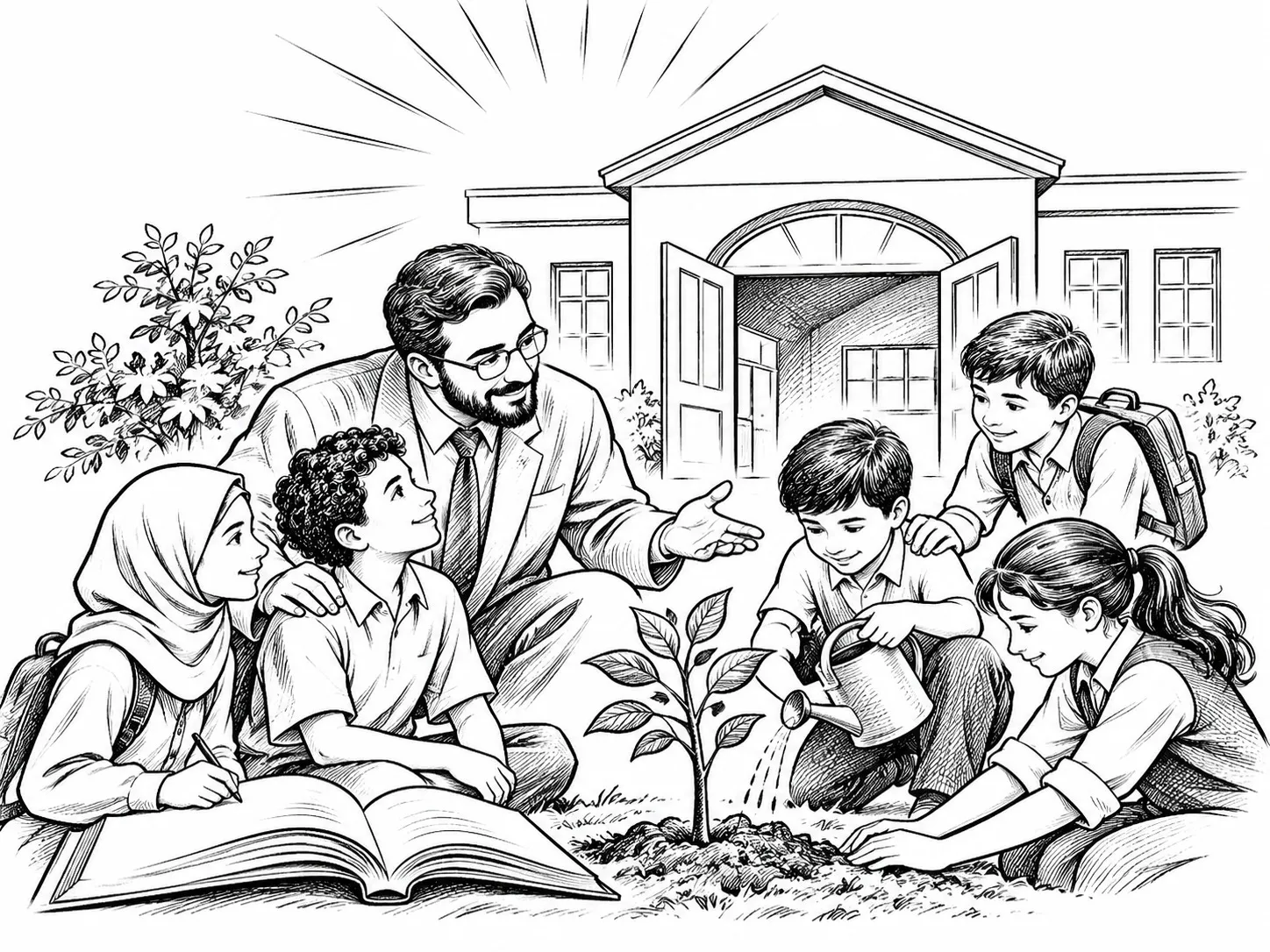
We need an education system that does not only ask a person about the years he spent on the school bench, but about the knowledge he has gained, the skills he has mastered, the values that govern his conduct, and his ability to contribute to life.
For the aim of education is not that a person should hold a certificate proving that he studied, but that he should possess knowledge, competences and values that enable him to live with awareness, work with mastery, and contribute to building his society.
And when our first question becomes: “What do you know? And what can you do?”, we will have begun the move from a system that measures the journey of learning in years and certificates to a system that recognises the value of learning and its effect on the person and on life.
Inspired by the book “A Theory of Upbringing and Education: Towards Rebuilding the Education System”, part of the series “Towards a Theory of Upbringing and Education”.
Dr. Abdulqawi Mukrid Al-Qadasi
Related service: Parenting and education counselling
Questions people hesitate to ask
Is a university degree enough proof of competence?
The article grants that certificates have played an important role in organising education and documenting attainment, but the problem begins when the certificate becomes a substitute for verifying competence. A graduate may lack the practical skills required, while a self-taught person who completed real projects is excluded for not holding one.
How can skills gained through self-learning be recognised?
The article proposes distinguishing between the body that provides education and the body that verifies competences, so recognition does not depend on where or how long someone studied. This requires a reliable assessment system with clear standards, suitable tools and independent bodies subject to quality assurance, since not every claimed skill deserves recognition.
Does recognising competences mean abolishing schools and universities?
No. The article stresses that rebuilding the education system does not mean abolishing the school, the university or the certificate, but keeping what has proven its value and reorganising what no longer fits, with the state still responsible for the right to education, setting standards and regulating the recognition of qualifications.
Share your thoughts
Have you been through something like this, or has a question come to mind? Write it here. Your words may help another reader.
جزاكم الله خير وحفظكم الله
بورك فيك ، وشكرًا للمتابعة والتعليق