We Are the Ones Cheating Our Children… Not the Other Way Round!
 Dr. Abdulqawi Al-Qadasi · 3 min read
Translated from the Arabic. Read the original (العربية)
Cheating in the age of artificial intelligence and the need to rebuild the education system
On 22 November 2026, South Korea's minister of education resigned following a crisis caused by tightened anti-cheating measures in university entrance exams, after the top scorer in a national exam for tax accountants admitted to cheating with a miniature camera, a smartphone and artificial intelligence.
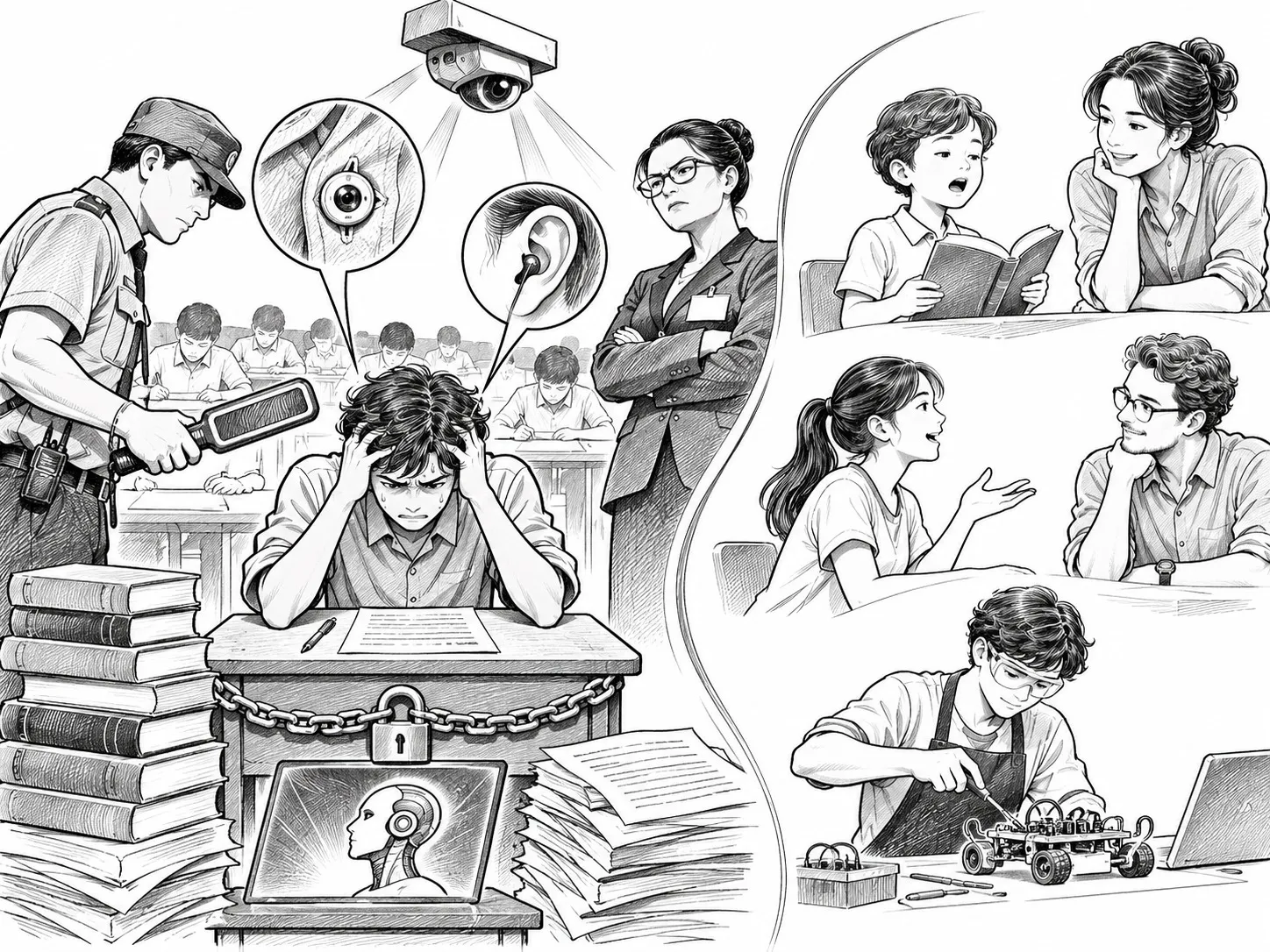
The anti-cheating measures went as far as inspecting students' glasses and the buttons on their clothes, for fear that electronic devices were hidden in them!
In many of our countries, educational institutions turn into something like military barracks in exam season: invigilation committees, searches and strict security measures. And yet cheating continues, and the forging of certificates and trading in them spread.
Today, schools and universities all over the world are busy searching for ways to detect the use of artificial intelligence in exams, assignments, research papers and master's and doctoral theses.
So how long will the learner keep inventing ways to cheat, and the educational institution keep inventing ways to stop him?
And why do states exhaust their efforts in fighting cheating, instead of rebuilding the education system that generates many of its motives?
We are the ones who weigh our children down with dense school subjects, demand that they memorise a huge amount of information within a set time, and then make their passage from one stage to the next depend on their ability to recall that information in a few hours, without sufficient regard for the differences in their abilities and readiness.
Then we are surprised that some of them resort to cheating!
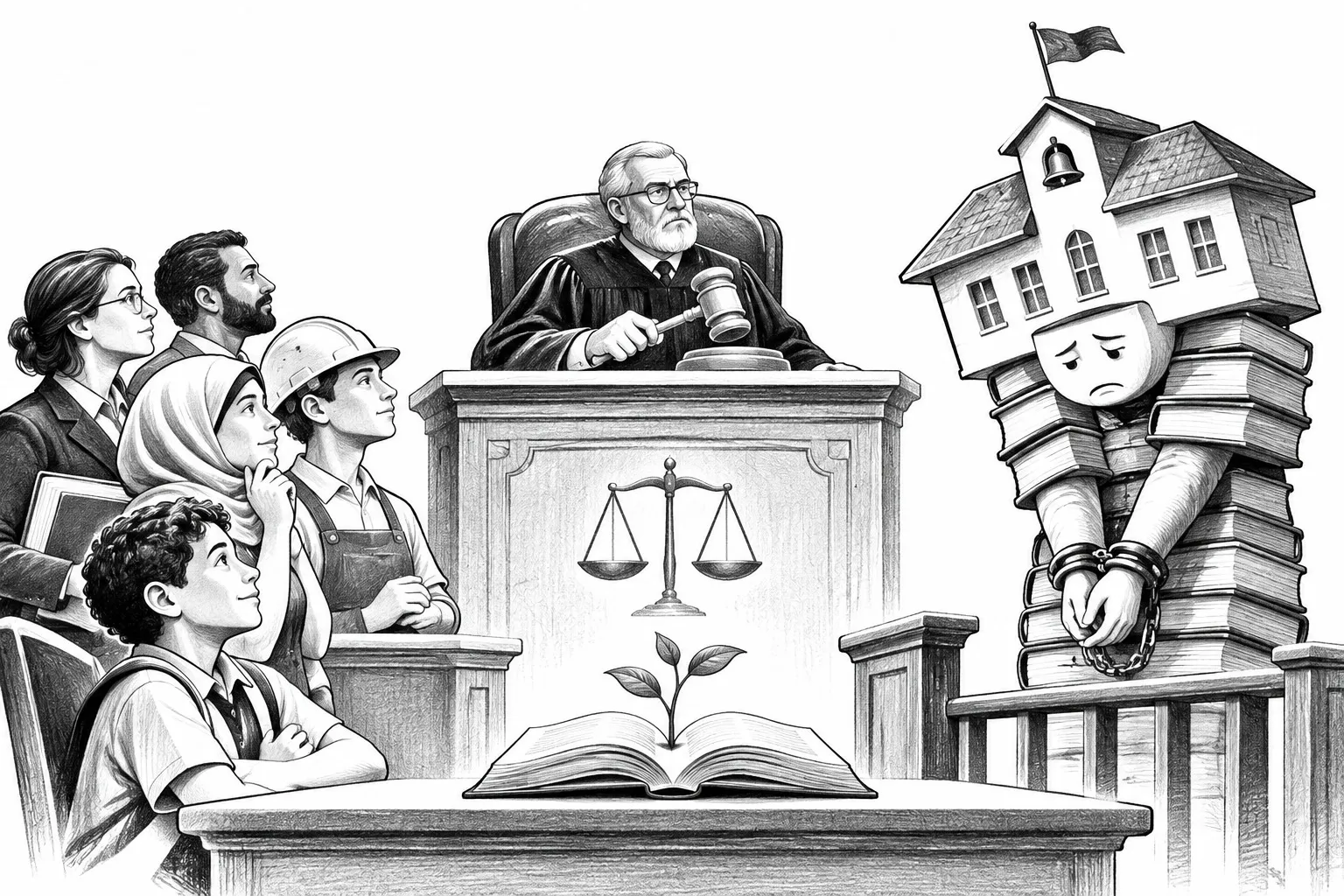
I do not justify cheating, nor do I absolve the one who commits it of his moral responsibility, but I refuse to put the learner on trial without putting the education system itself on trial.
Artificial intelligence has exposed the fragility of many of the assessment tools we have relied on for decades, and it is not wise to keep facing the technologies of the future with the tools of the past.
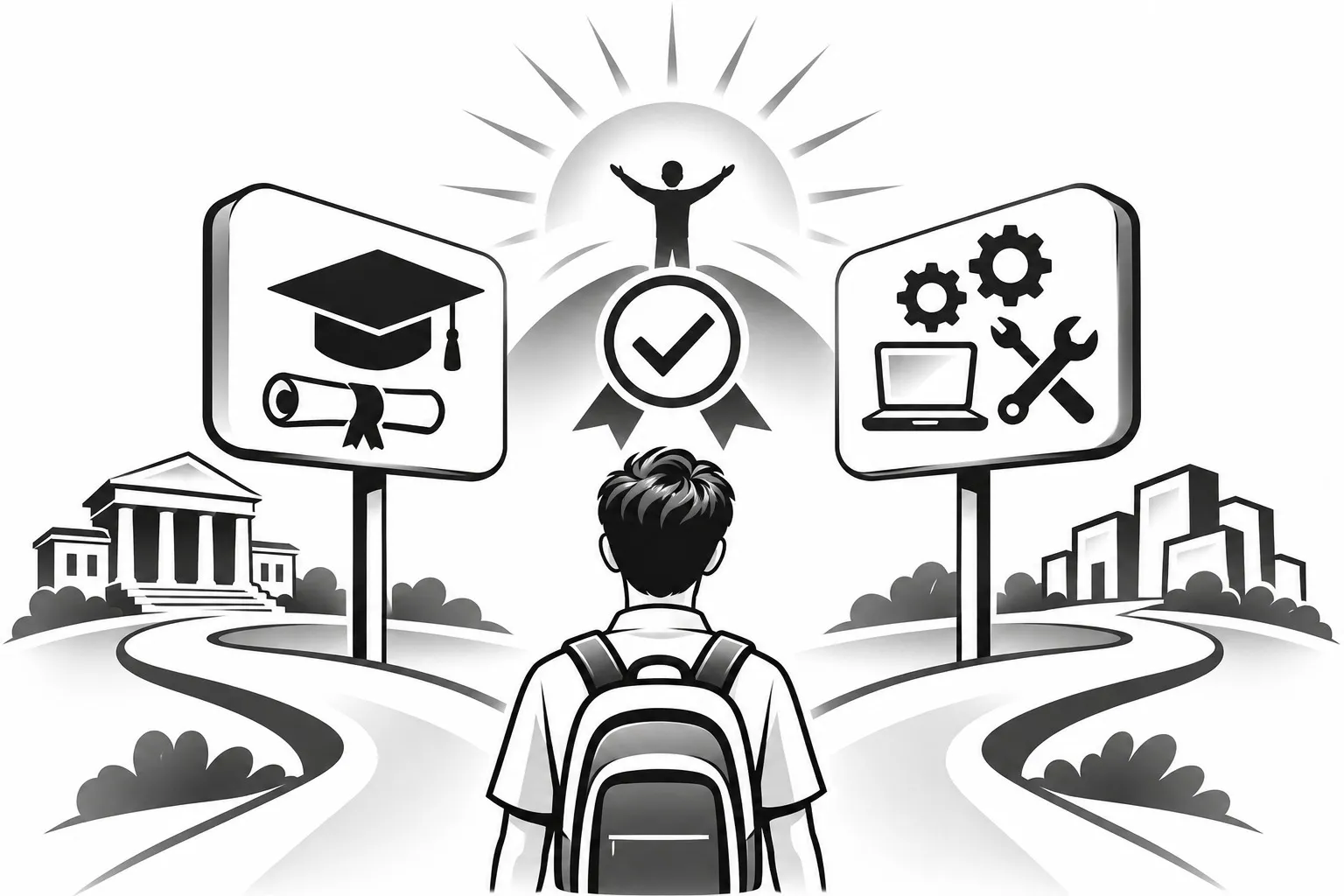
Through our theory of upbringing and education, I call for rebuilding the education system so that mastery is the goal and assessment is the means of verifying it, and so that the learner is given the time and support he needs until he masters, without being punished by the waste of years of his life.
Let us consider these examples from real life:
If you want to know a person's ability to drive a car, let him drive it in front of you.
If you want to know a child's ability to read, have him read in front of you.
If you want to know a learner's mastery of a foreign language, hold a conversation with him in it.
If you want to know a doctor's competence, test his ability to diagnose and to practise medicine.
And if you want to verify a researcher's worthiness of a doctorate, test his ability to conduct research, analyse data, critique ideas and produce knowledge, instead of merely examining the text of his thesis for traces of artificial intelligence.
So where will the learner find room to cheat when what is required is to prove his real competence? And why would he be driven to it if the system gives him the chance to learn until he masters?
When we offer our children an education that does not suit their age, consume years of their lives, and give them certificates that do not necessarily reflect their real competences, we must ask ourselves:
Who is really cheating whom?
I am not calling for an education system in which cheating becomes harder because of tighter surveillance; I am calling for a system in which the need for cheating disappears, and so does any point to it.
So let us rebuild the education system, instead of spending our lives fighting the results of its shortcomings.
Dr. Abdulqawi Mukrid Al-Qadasi
Inspired by the book A Theory of Upbringing and Education: Towards Rebuilding the Education System.
Related service: Parenting and education counselling
Questions people hesitate to ask
Why do students cheat in exams?
The article argues that the education system generates many of the motives for cheating: it loads students with dense subjects, demands they memorise huge amounts of information in a set time, and makes their progress depend on recalling it in a few hours, with little regard for differing abilities. It does not justify cheating or absolve the cheat of moral responsibility.
How should schools respond to cheating with AI in exams and research?
The article says it is unwise to face future technologies with the tools of the past. It is better to test real competence through performance: have a child read in front of you, converse with a learner in the foreign language, and test a doctoral candidate's ability to research, analyse data and critique ideas, instead of scanning the thesis for traces of AI.
Share your thoughts
Have you been through something like this, or has a question come to mind? Write it here. Your words may help another reader.
No comments yet. Be the first to start the conversation.