I Have Written the Last Line… Will the Story of a Different School Begin?
 Dr. Abdulqawi Al-Qadasi · 3 min read
Translated from the Arabic. Read the original (العربية)
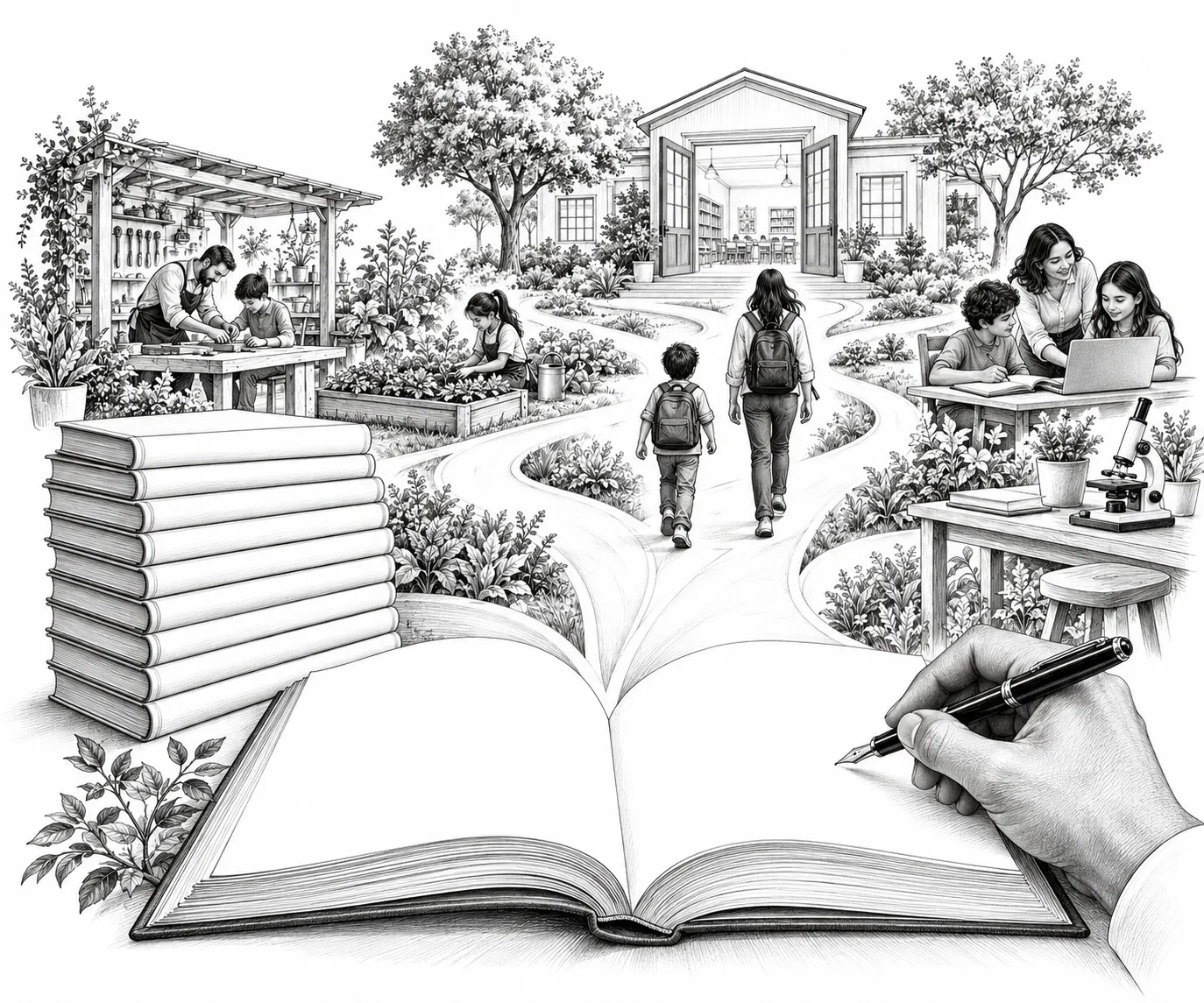
At this moment, I am writing the last line of my book: The Theory of Upbringing and Education… Towards Rebuilding the Education System.
With this full stop, a series of ten books comes to a close, and the questions of a journey that began in the mid-1990s come together. It is a journey I am still living as a teacher, educator, supervisor, educational leader and education consultant, inside Yemen and beyond.
I felt that this journey had a claim on me: that its experiences and questions should not stay locked in memory, and that I should try to offer a contribution from which people could benefit, in which the researcher, the educator and the interested reader might find something worth reading and discussing.
The series began with Education… A Journey Without End, passed through those whom “school did not teach… so the world learned from them”, and through the school, the roots of upbringing, the learner, leadership, the teacher, the curriculum and the structure of the education system, until its threads met in a single question:
Should the human being adapt to the education system, or should we build a system that accommodates people’s differences, abilities and needs?
This is where the theory begins.
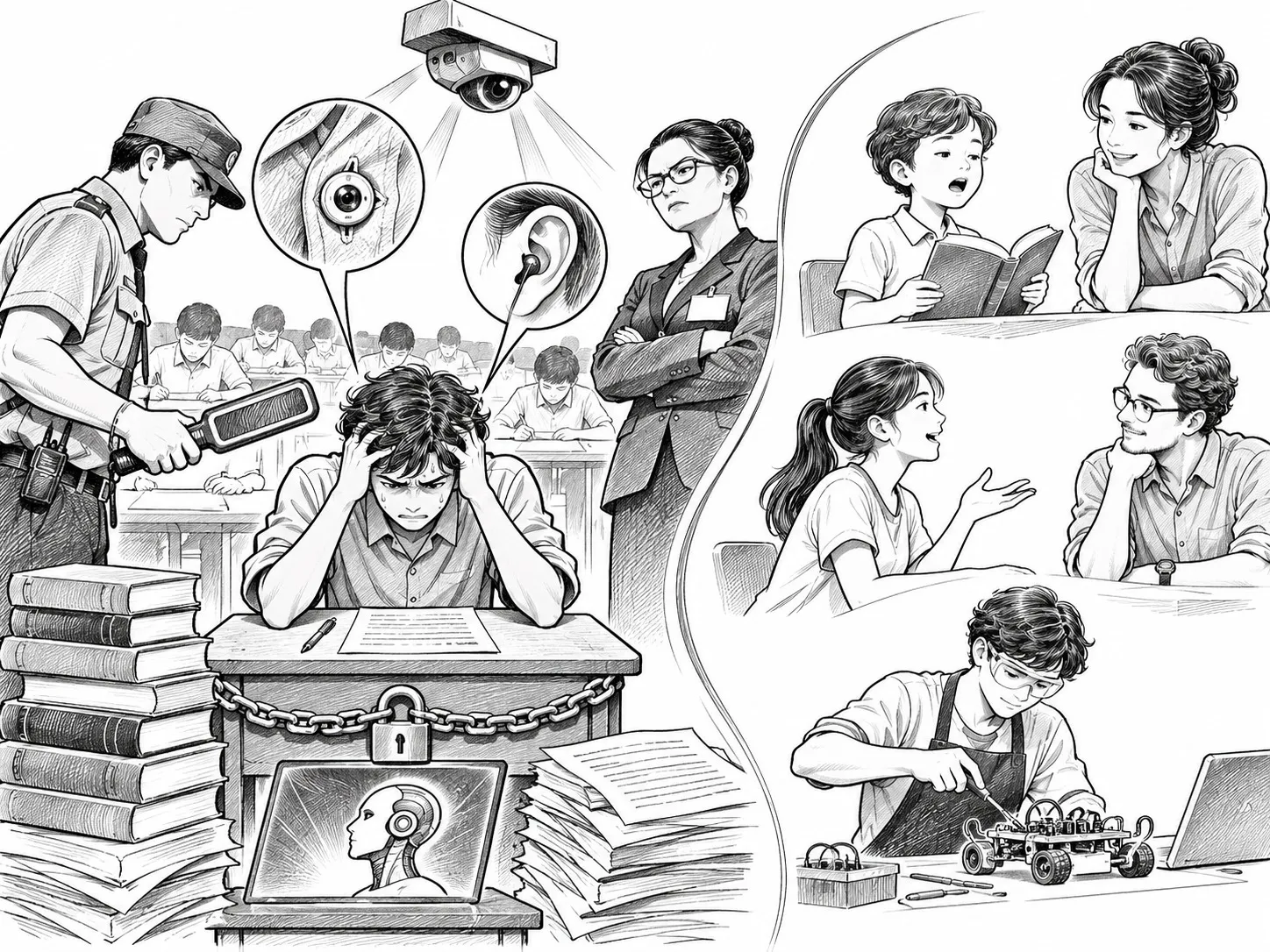
What if a student no longer had to wait a whole year to move on in what he has mastered, and another was no longer pushed to a new level before he understood? And what if a person could learn at school, at an institute, in a factory, on a farm or at home, and then prove his competence before a trusted assessment body, instead of being turned away because his path of learning does not resemble the usual one?
And what if the school became a centre for upbringing and for discovering and developing abilities, not merely a station for passing through the years and collecting certificates?
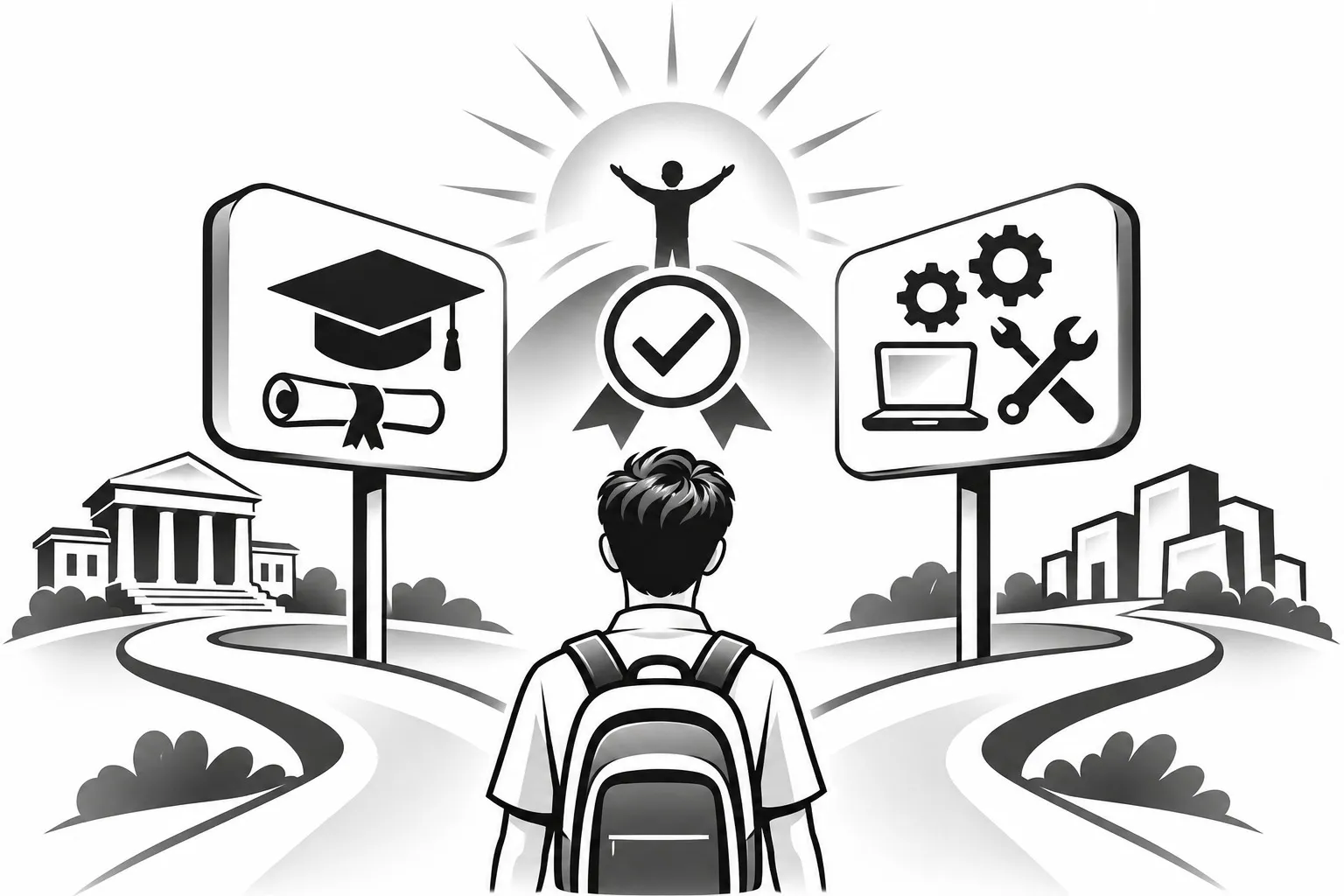
The theory proposes a shared and flexible foundation for all children, building language, arithmetic, thinking, and scientific and digital literacy, alongside spiritual, moral and social formation. It then opens academic, vocational, technical, artistic and research pathways, between which one can move and to which one can return, so that an early choice does not turn into a final verdict on a person’s future.
At the heart of this vision is a distinction between three things we have grown used to bundling together: where a person learns, how we verify what he has learned, and who recognises his competence. The ways and the length of learning may differ, but mastery still needs reliable evidence and standards.
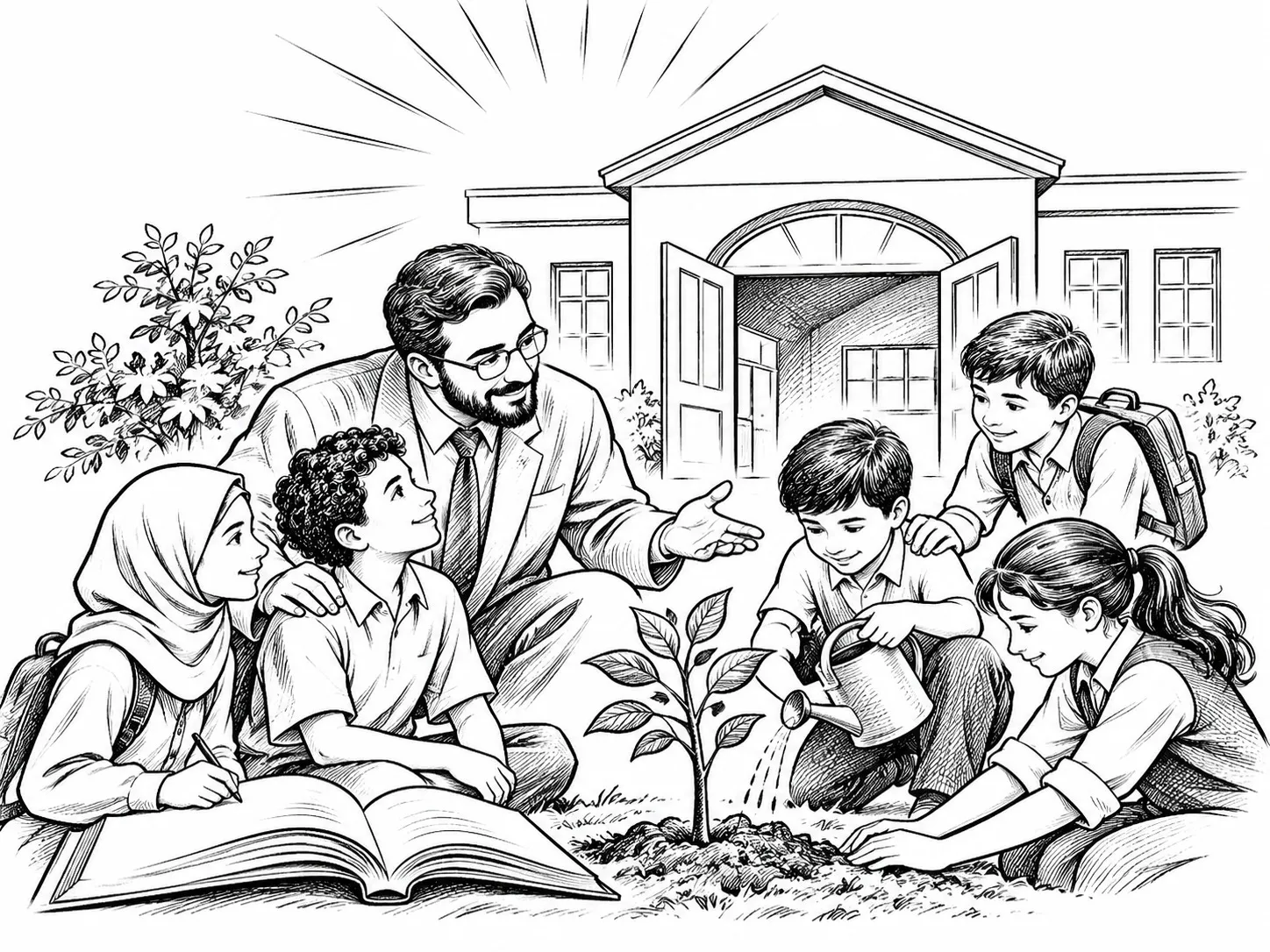
The call is not to abolish the school, the teacher or the certificate, nor to reduce the human being to a skill that qualifies him for a job; it is to rebuild the relationships between them, so that education becomes wider than its walls, the certificate more truthful in what it signifies, the teacher more able to educate and guide, and the state a guarantor of rights, justice and quality.
I know the reader will ask: how can this be applied? What about childhood, growth and social interaction? Who sets the standards? And how do we protect learning from chaos, exploitation and widening gaps?
These questions are part of building the theory. That is why the book discusses governance, funding, assessment and the recognition of qualifications, gradual transition, and how we test the proposal and review its results before expanding it.
This is an attempt that came out of the heart of the field and drew on the efforts of those who came before and of contemporaries. I do not present it as a final word, but as a contribution that I hope researchers will read with an eye for examination and critique, and in which practitioners will find a starting point for development and experimentation.
Today I completed its Arabic edition, and I hope it will find its way to publication, and then to readers in English and Malay as well. Some of its ideas may not have the chance to be applied today, but their being impossible now does not mean they are impossible tomorrow, especially in an age in which the transformations of technology and artificial intelligence are accelerating.
As for the last line of the book, it was:
“The education system we need does not merely teach the human being; it reviews its own performance, learns from its results, and continually develops itself.”
Praise be to God for the completion of this effort. The writing of the book has ended, and I hope the theory’s journey into life will begin.
Dr. Abdulqawi Al-Qadasi The moment the book was completed: Thursday, 22 October 2026, 8:35 pm, Malaysia time.
Related service: Parenting and education counselling
Questions people hesitate to ask
What is Dr. Abdulqawi Al-Qadasi's book The Theory of Upbringing and Education about?
The article explains that the book starts from the question of whether people should adapt to the education system or the system should accommodate their differences. It proposes a shared foundation for all children, building language, arithmetic, thinking and scientific and digital literacy alongside spiritual, moral and social formation, followed by multiple pathways in which an early choice never becomes a final verdict on a person's future.
Does the theory call for abolishing the school or the certificate?
No. The article stresses that the call is not to abolish the school, the teacher or the certificate, nor to reduce a person to a job skill, but to rebuild the relationships between them, so that education becomes wider than its walls, the certificate more truthful in what it signifies, and the state a guarantor of rights, justice and quality.
Share your thoughts
Have you been through something like this, or has a question come to mind? Write it here. Your words may help another reader.
تبارك الله حفظكم الله ورعاكم