Do We Need a New Teacher or a New Education System?
 Dr. Abdulqawi Al-Qadasi · 8 min read
Translated from the Arabic. Read the original (العربية)
When the nature of learning changes, it is not enough to change the teacher's roles and leave the system as it is
Dr. Abdulqawi Mukrid Al-Qadasi
Whenever we talk about developing education, we have grown used to turning our eyes to the teacher. We ask him to develop his skills, renew his teaching methods, use modern technologies, take account of individual differences, discover talents, and develop thinking and creativity in learners. And with every new shift in knowledge or technology, we add more tasks to his list of responsibilities, as if reforming education begins with the teacher and ends with him.
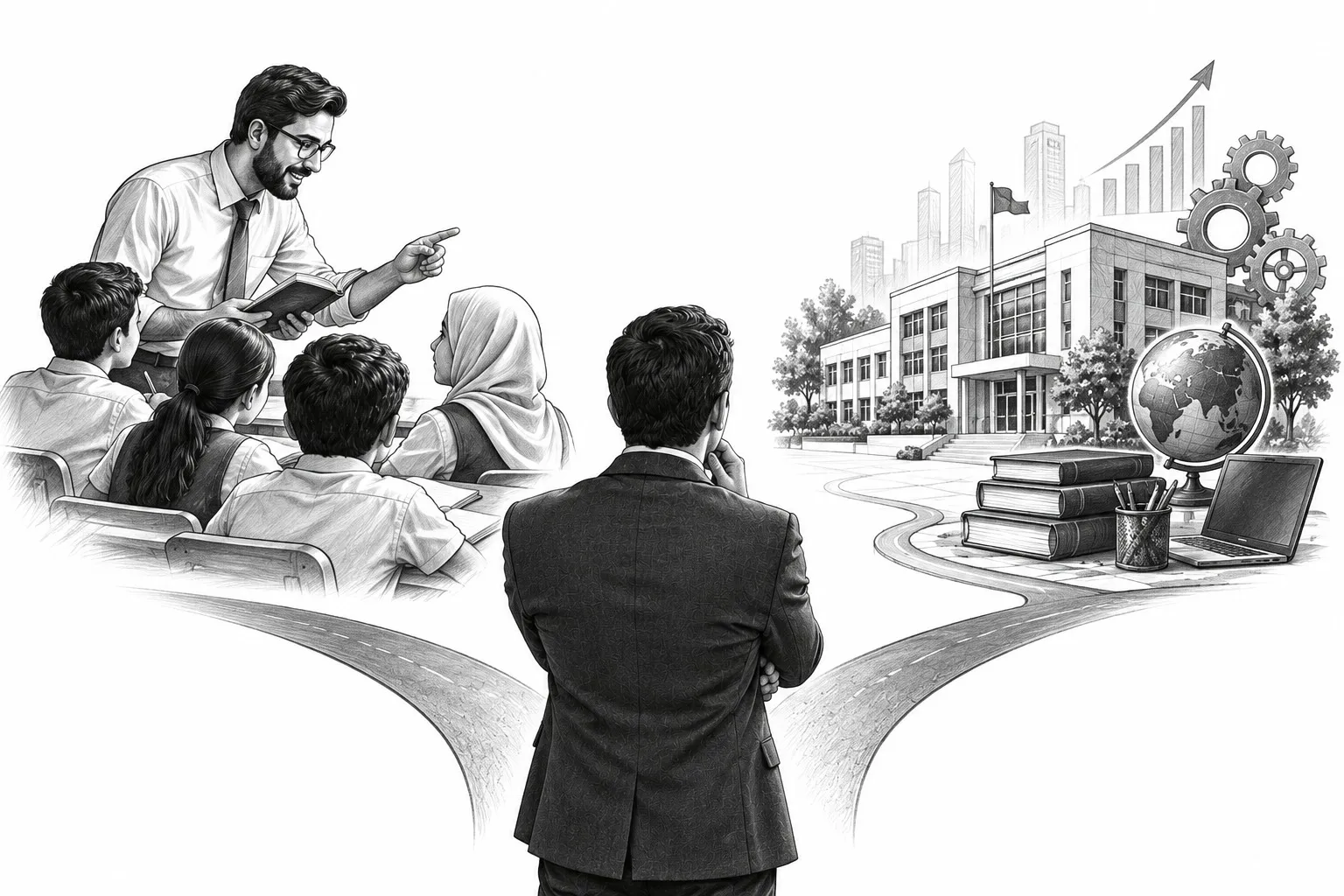
But we rarely stop to ask: is the problem in the teacher alone? Can he perform these new roles inside an education system that has not changed much in its basic structure? And do we really need a new teacher, or a new education system that redefines the teacher, his functions and his responsibilities?
These questions do not diminish the importance of the teacher; they start from recognising his standing. For we cannot understand his role or judge his performance in isolation from the system that selects and prepares him, decides what he teaches and how he teaches it, and then holds him accountable for the results.
A New Teacher in an Old System!
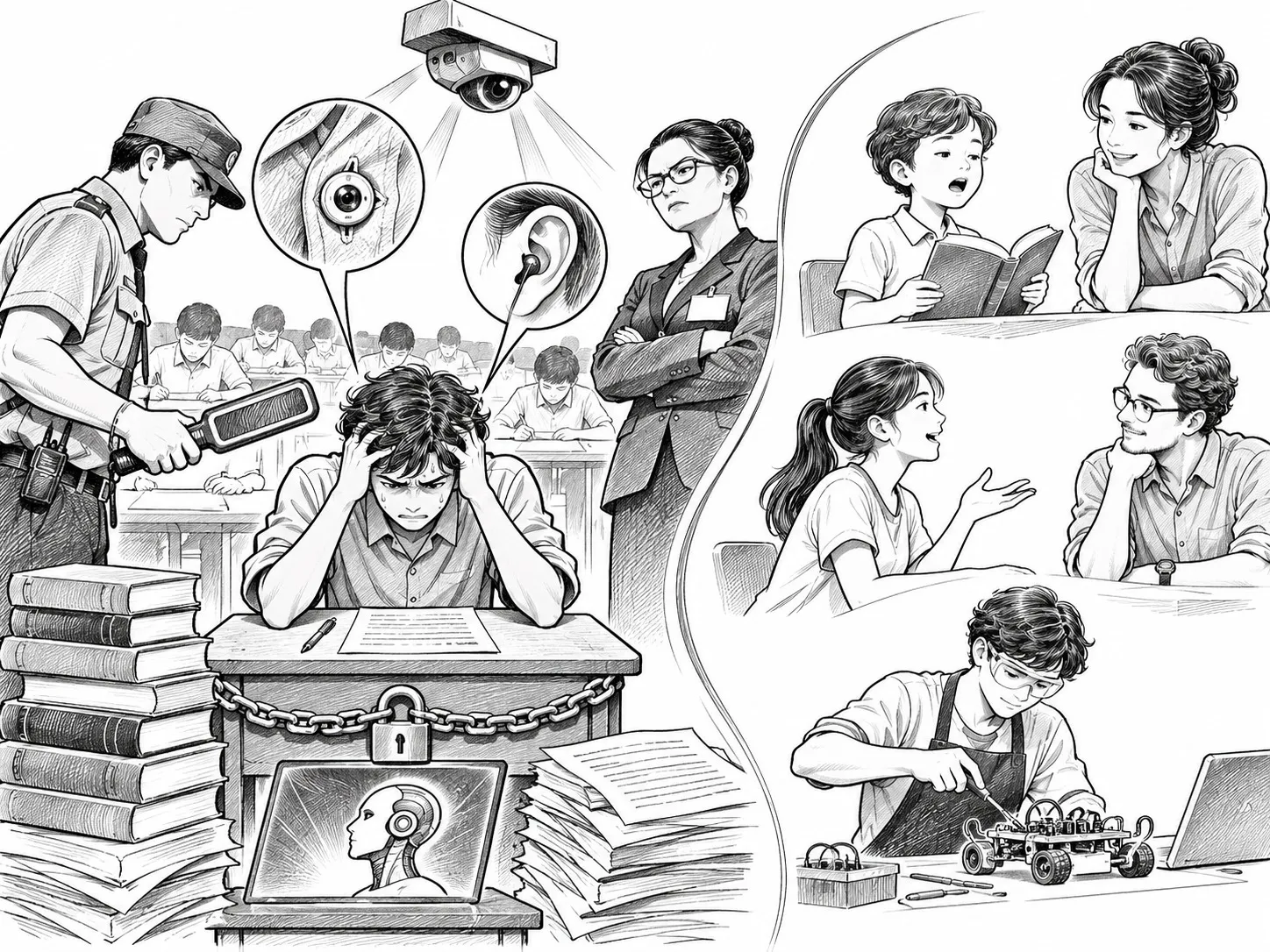
Consider the picture of the teacher in the contemporary school. He is required to take account of individual differences, yet he works according to a unified curriculum and a fixed timetable. He is required to help every learner progress according to his abilities, yet he sometimes faces dozens of students in a single class, and in some educational settings the number may exceed a hundred. He is required to develop thinking and creativity, while in many schools tests and grades remain the most prominent measure of whether education has succeeded.
We even ask him to be a facilitator of learning, not merely a transmitter of information, and then oblige him to finish the syllabus on schedule, regardless of how much the learners have actually mastered.
Here the paradox appears: we want a new teacher who performs different roles, yet we place him inside an old system that imposes on him the same functions and the same constraints.
For this reason, changing the teacher's title to "facilitator" or "mentor" is not enough to bring about a real transformation in education. Roles do not change merely by changing terms, but by changing the environment in which they are practised, the goals they seek to achieve, and the standards by which their success is measured.
Is the Teacher the One Who Stands at the Blackboard?
In our minds, the concept of the teacher has been tied to a person who works inside a school and teaches a specific subject to a group of students, according to a syllabus, a timetable and periodic tests. This picture has played an important role in the history of modern education and has helped organise knowledge and widen access to it.
But it is not the only picture of education that humanity has known.
Throughout history, people learned from scholars, craftsmen, experts and educators, in homes, mosques, workshops, farms and workplaces, before the formal school became the dominant path to acquiring knowledge and qualifications.
Today, with the development of communication tools, digital platforms and artificial intelligence, opportunities for learning are widening once again. A person may learn a language with a teacher in another country, acquire a technical skill from an expert online, train for a profession inside a factory, or develop his abilities through practice and self-learning.
Are those who contribute to a person's education outside school less deserving of the title of teacher than those who teach inside it?
The answer requires us to reconsider the criteria by which we define who is a teacher. The place where he works, or the job title he carries, should not be the only criterion; what matters is the knowledge, experience and competence he has, and the real learning he is able to bring about in others.
This does not mean that everyone with experience automatically becomes qualified to teach. Teaching requires professional and ethical competencies, and standards for verifying the ability to help others learn.
From Transmitting Knowledge to Building Competence
In the traditional education system, transmitting knowledge occupies a large part of the teacher's work. He explains lessons, assigns students to memorise or understand information, and then tests how much they have been able to absorb within a fixed period of time.
But access to knowledge is no longer confined to the teacher or the school textbook. The learner has become able to reach multiple sources and obtain explanations, examples and exercises suited to his needs, and even to make use of smart tools that help him learn.
This shift does not cancel the need for the teacher, but it changes the nature of some of his functions.
Instead of spending most of his time presenting information, his role can expand to discovering the learner's abilities, helping him choose his path, guiding his learning, following his progress, and verifying that he has the competencies he needs.
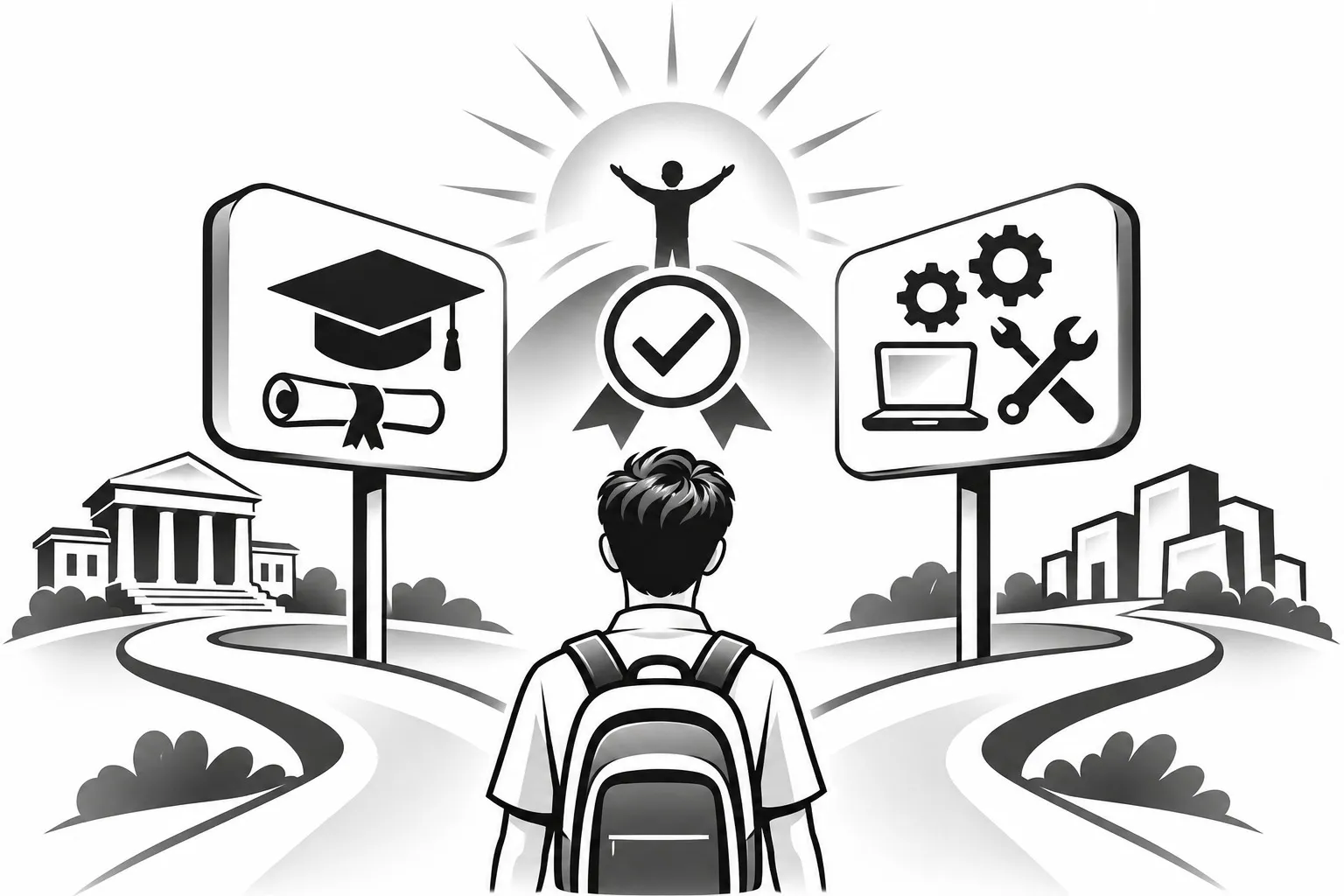
Here we should rethink the question we put to the learner. Instead of the main question being: how many years did you study? or what grade did you get? it becomes: what have you actually learned? And what are you now able to accomplish?
Yet moving to this vision is not achieved by the teacher's decision alone. It requires an education system that recognises competence, allows for a variety of learning paths, and gives learners the time and support they need to acquire what they need.
And Can Artificial Intelligence Replace the Teacher?
The rapid development of artificial intelligence has raised an old question in a new form: can we do without the teacher?
In truth, the answer depends on what we mean by a teacher, and what we expect from education.
If we reduce the teacher's function to explaining information, providing exercises and correcting some answers, then technology has become capable of performing part of these tasks, and its capabilities may expand in the future.
But education is not limited to acquiring information and skills. It also includes building character, developing responsibility, strengthening values, learning cooperation and respect for others, and gaining the ability to make decisions and deal with life.
These aspects cannot be reduced to interaction with a technical tool, however great its capabilities.
A person needs someone to accompany him in learning, understand his circumstances, help him overcome difficulties, and be a model for him in conduct and responsibility. He also needs to interact with others in real social settings where he gains life experience.
For this reason, the future of the teacher should not be discussed as a struggle between man and machine, but as an opportunity to redistribute educational functions, so that technology contributes what it can perform efficiently, and the human being is freed to a greater degree for what requires his presence, his experience and his educational responsibility.
A New System Creates New Roles
If we want an education that takes account of the differences between learners, allows them to progress according to competence, and recognises learning acquired from school, society, work and experience, then the way teachers are prepared, accredited and assigned their roles must change with it.
We may need a teacher who specialises in building basic skills, another in guiding learners and following their progress, a professional expert who supervises practical training, an educator who helps build character and values, and a specialist who uses educational technologies to widen learning opportunities.
This does not mean dividing one teacher into separate functions in a rigid way. It means recognising that education is a broad process, and that the responsibilities we place today on one person can be distributed among several people, institutions and learning environments, according to the nature of the learning and the needs of the learners.
In this vision, the school does not disappear, but it changes from an institution assumed to monopolise most learning into a centre that contributes to preparing the learner, discovering his abilities, guiding his path, and connecting him to the learning opportunities available in society.
Nor does the teacher lose his standing. Rather, his fields of work widen, his opportunities for influence multiply, and recognition of his competence becomes tied to his actual ability to teach and to educate, not merely to his attachment to a traditional school job.
Which Do We Change First?
The question posed in the title of this article may seem to put us before two choices: either change the teacher or change the education system. But the relationship between them is not one of competition or exclusion.
We need to develop the teacher, no doubt about that, but his development should be part of a wider transformation of the education system, not a measure separate from it.
The change required does not mean abolishing everything the modern school has known, or ignoring its achievements in spreading education and organising knowledge. It means benefiting from those achievements and from accumulated human experience, and then building a system that suits human needs and the possibilities of the age we live in.
It is not logical to reconsider the goals of education, its curricula, its means and its methods of assessment, and then assume that the teacher will continue to perform the same functions in the same way. Nor is it logical to ask him to take on new roles without preparing for him the environment that enables him to perform them.
We need to rethink the system first, as the framework within which roles are defined, and to develop the teacher in parallel with this transformation, so that he is a partner in building it, not merely an executor of its decisions.
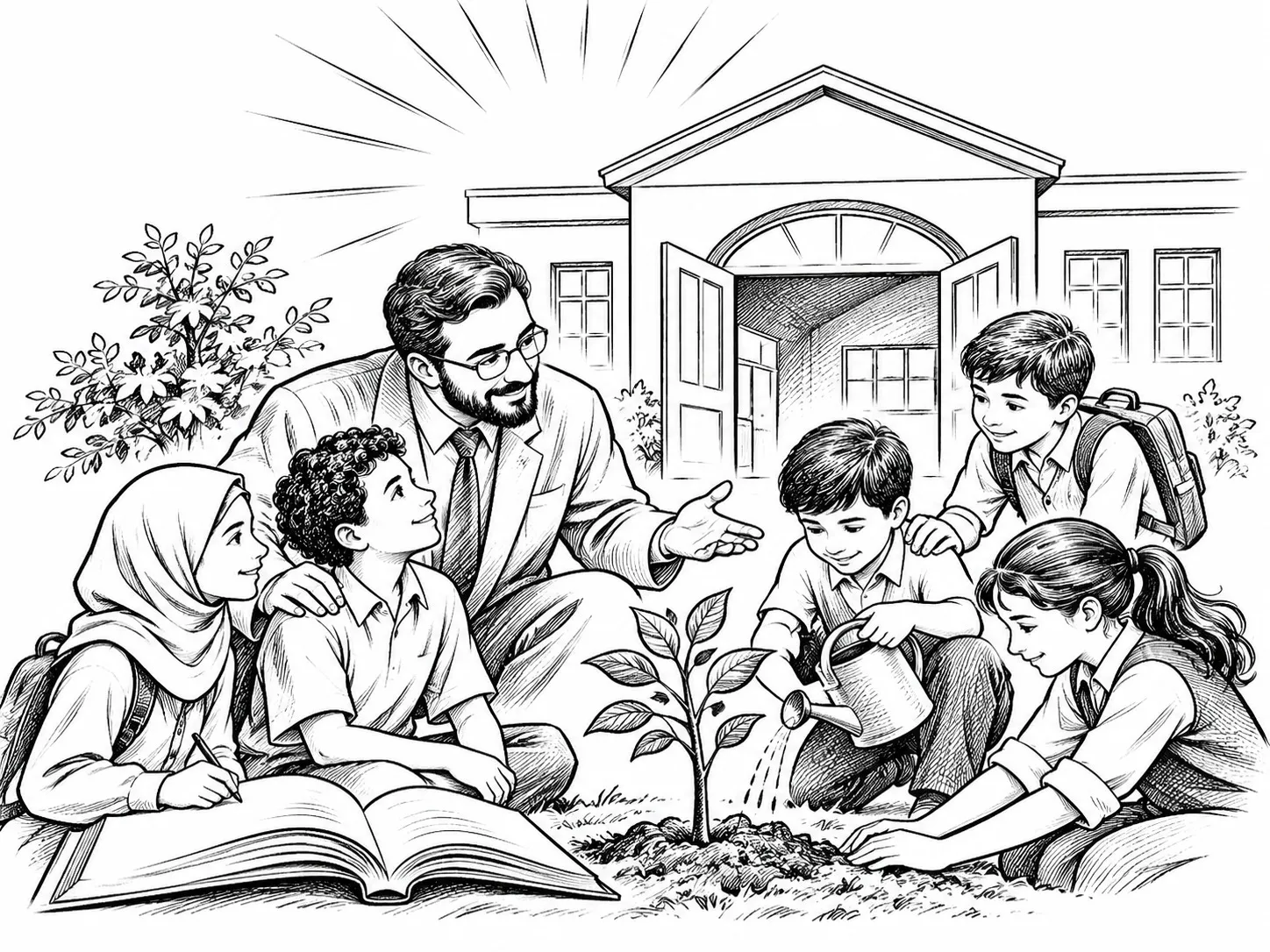
Most importantly, the aim of this transformation must remain clear. We do not develop education for the sake of the school, nor do we redefine the teacher for the sake of the profession alone, but for the sake of the human being we want to help learn, grow and take an active part in life.
The teacher is not the aim of education, and the school is not its aim; the aim is the human being we want to build.
Hence the real question is not: do we need a new teacher or a new education system?
It is rather: how do we build a new education system that allows the teacher to perform his renewed roles, and gives every learner a real opportunity to discover and develop his abilities?
We do not make the teacher of the future by reforming the teacher alone, but by reforming the system he will work within.
An article drawn from the book "The Teacher: Between the Reality of the Profession and the Future of Education" by Dr. Abdulqawi Mukrid Al-Qadasi, part of the series "Towards a Theory of Upbringing and Education", 2026.
Related service: Parenting and education counselling
Questions people hesitate to ask
Is the problem the teacher or the education system?
The article argues that teachers are asked to address individual differences and develop thinking while working with a unified curriculum, a fixed timetable, crowded classes and tests as the main measure, so their performance cannot be judged apart from the system. Their development should be part of a wider change in the system, not a separate measure.
Can artificial intelligence replace the teacher?
The article holds that technology can take on part of explaining information, setting exercises and correcting answers, but education also means building character, responsibility, values and cooperation, which cannot be reduced to a tool. The issue is not man against machine but redistributing functions so the teacher focuses on what needs his presence and experience.
Who counts as a teacher outside school?
The article proposes that workplace or job title should not be the only criterion, but the knowledge, experience and competence a person has and the real learning he brings about in others. It adds that experience alone does not automatically qualify someone to teach without professional and ethical competencies and standards to verify them.
Share your thoughts
Have you been through something like this, or has a question come to mind? Write it here. Your words may help another reader.
No comments yet. Be the first to start the conversation.