A New World… and an Old School
 Dr. Abdulqawi Al-Qadasi · 4 min read
Translated from the Arabic. Read the original (العربية)
The gap between the speed of life and the slowness of the educational system
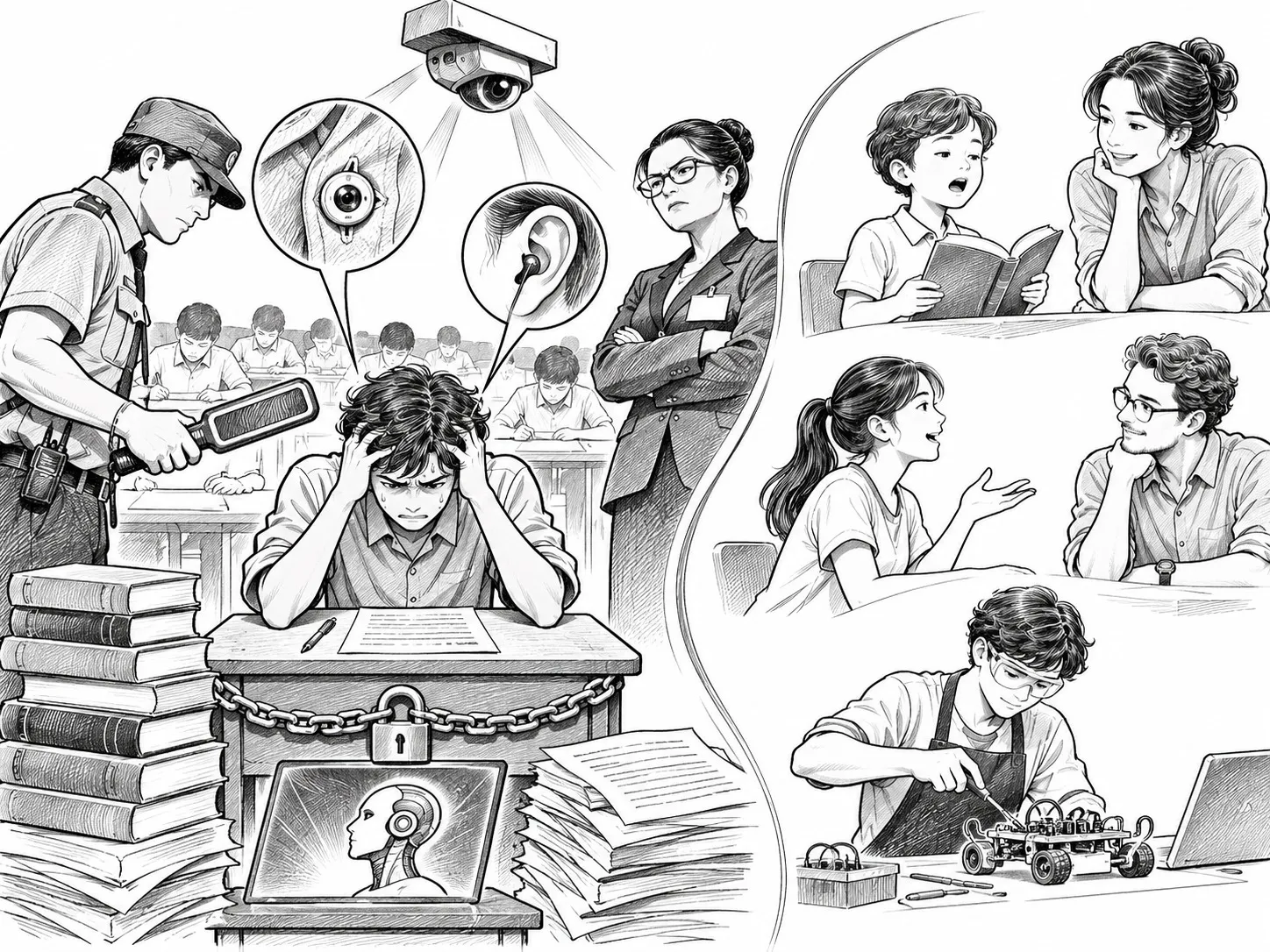
Today a child enters school carrying a small device through which he can reach the libraries of the world, and then sits in a seat waiting for the teacher to pass on to him a piece of information written in a prescribed textbook. Outside school he lives in a fast, connected world with many sources, then comes in to find knowledge divided into class periods, students sorted by age, and learning governed by a bell that announces its beginning and its end.
This paradox does not mean that the school has not changed. Its buildings have improved, its books have developed, screens, laboratories and platforms have entered it, and teaching methods have changed in many countries. The modern school has also achieved a historic accomplishment that must not be ignored: it widened opportunities for reading and writing, carried knowledge from limited circles to wide populations, and helped prepare generations who built medicine, engineering, economics and the other institutions of contemporary life.
Yet change has reached the tools more than the structure. Students of similar age still enter one class, study similar content for an equal period, then sit one exam and move up together to the next grade. There may be great differences among them in speed, interest and readiness, and still the system treats them as if the similarity of their ages meant the similarity of their minds.
The researchers David Tyack and Larry Cuban described these deeply rooted elements as the “grammar of schooling”: the picture society has grown so used to that it has become hard to imagine a school without age-based grades, separate subjects, a teacher standing before a group, divided time, and tests and certificates. Successive reform efforts have managed to change many things, while these basic rules have remained the most resistant to change.
That is why modern technology may enter the classroom and then be used to perform the same old function. The blackboard becomes a smart board, and the teacher goes on talking while the students listen. The book moves from paper to screen, and the pages, the syllabus and the test stay as they were. Homework becomes electronic, yet still asks the student for the same answer in the same way. The vessel has changed, while the philosophy of the work remains settled.
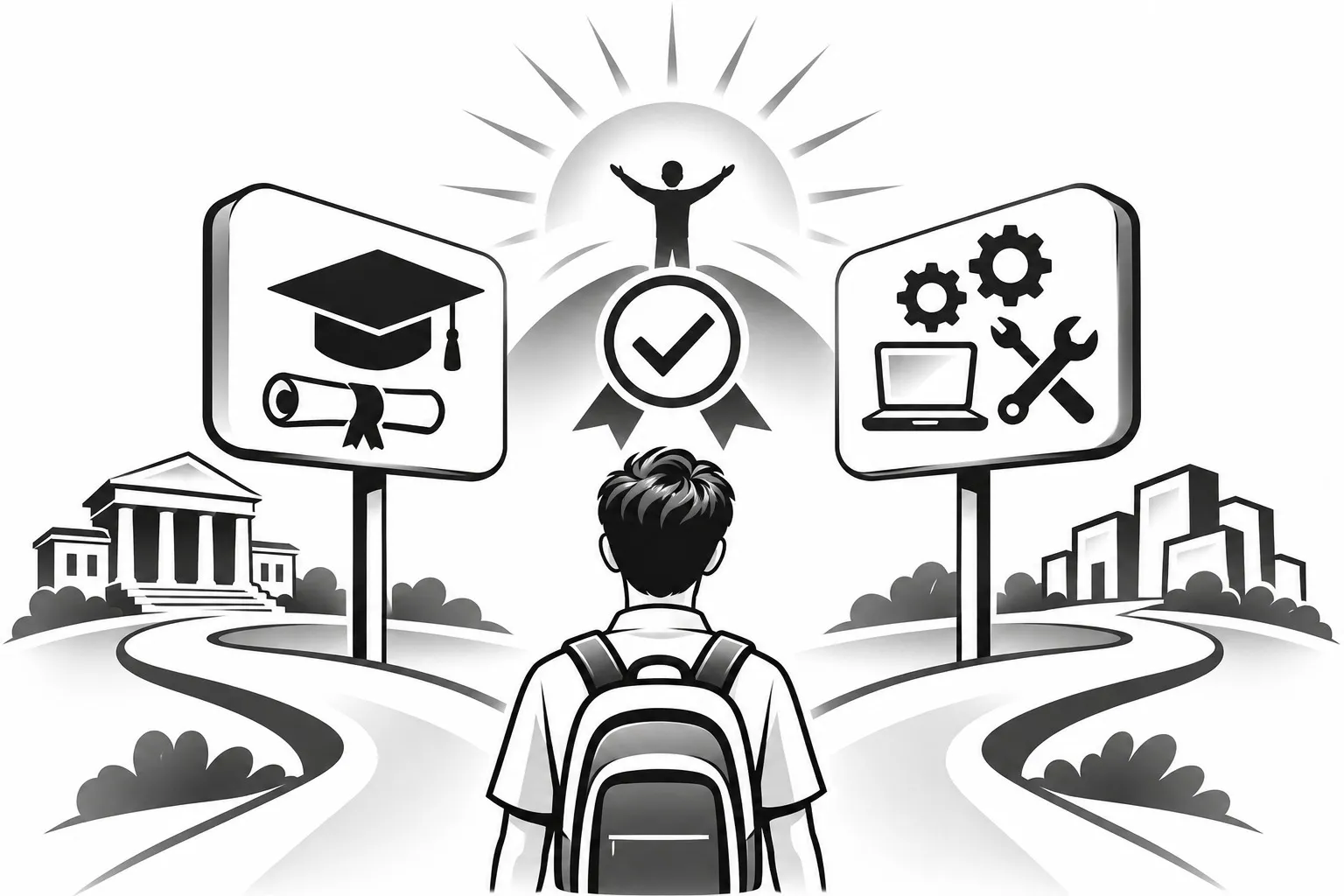
The gap appears more clearly when we look at the world of professions. Many of the jobs today’s children will enter have not yet taken stable shape, and some skills change within a few years. A student may begin studying a technical specialism and graduate to find that the tools he trained on have become outdated, and that the job market asks for the ability to keep learning more than for the memorising of fixed knowledge.
On the other hand, a young man may learn a skill in design, programming or media within a short time, practise it on real projects, and become more able to produce than a graduate who has spent years in theoretical study far from the field. The problem is not with the university, nor with theoretical knowledge; theory gives practice understanding and depth. The problem is in assuming that the number of years guarantees capability, and that a single formal path suits every learner and every profession.
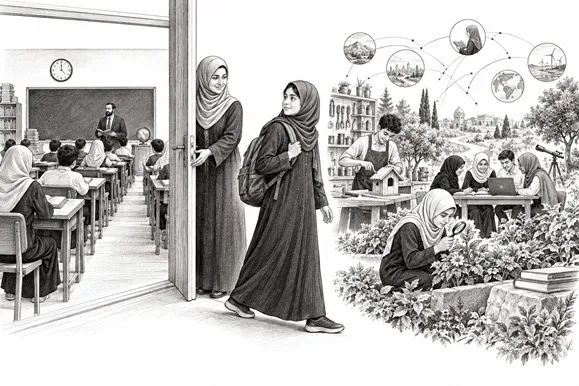
Even school time still treats learning as though it happens at a fixed hour. The school opens in the morning and closes in the afternoon, though the student can learn at home, in the library, on the playing field, on the farm and in the factory, and through a teacher thousands of miles away.
The question is not: do we abolish the school? But rather: why do we confine all education to it, and then confine the school itself to walls, a timetable and a textbook?
The International Commission on the Futures of Education has called for rethinking the relationships among the learner, the teacher, knowledge and the world, and for widening the spaces of education so that the school alone is no longer the place of learning, while preserving it as a public institution that fulfils an important social and human role.
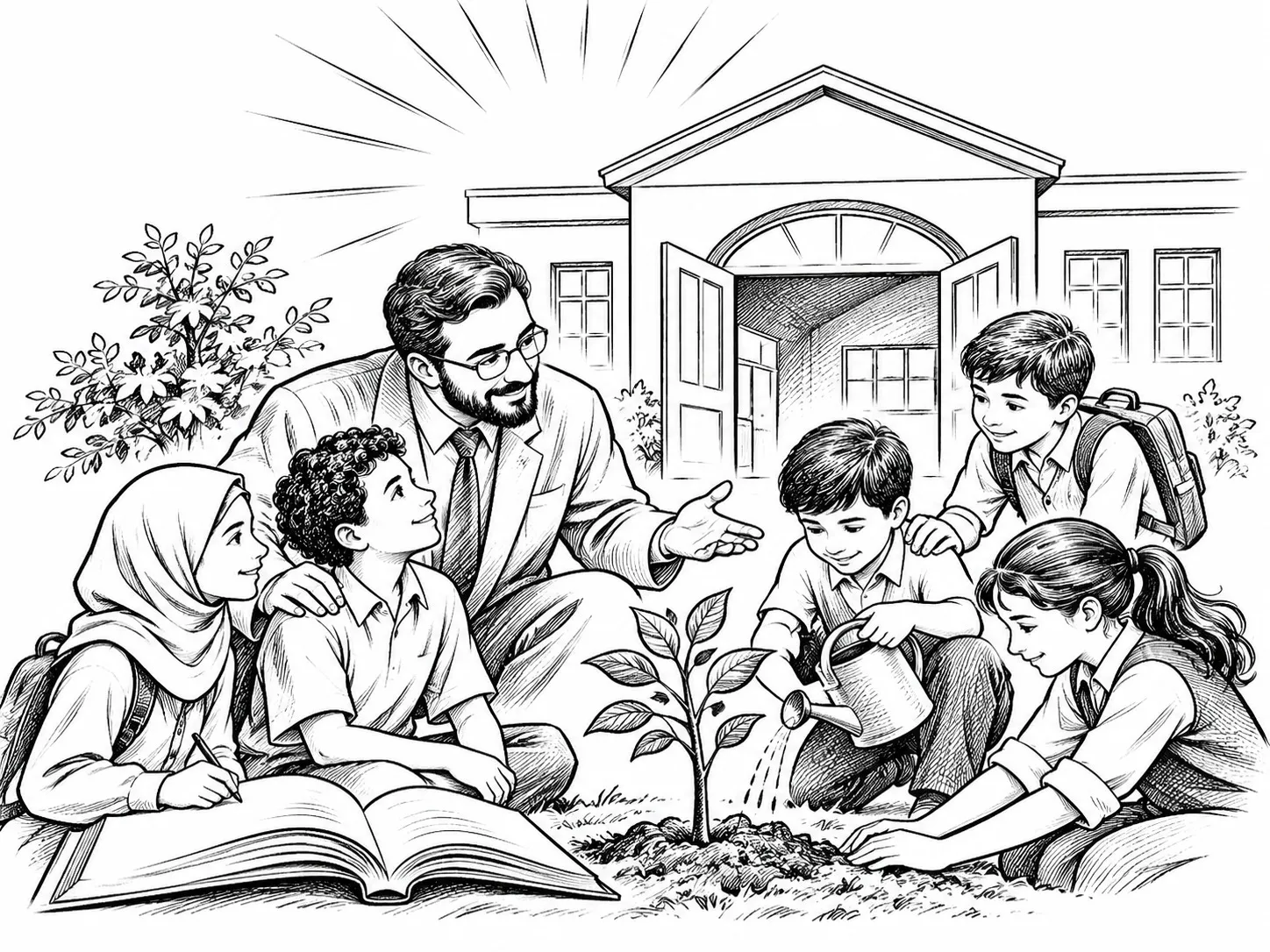
This is a balanced view; the school is not a building to be demolished, but an idea to be freed from its narrow limits. We do not need a less important school, but a more flexible one, more open to life, which recognises that learning can happen in many places, at different speeds, and along varied paths.
The new world does not need a school filled merely with more devices, but a new understanding of time, place, curriculum and the role of the learner. It needs an education that looks at the student as a human being with his own abilities, interests and pace, not a number that sits in a class and waits for the end of the year.
When the screen changes and everything behind it stays as it was, we are not making a new education; we are giving the old school a modern garment. True renewal begins when we ask: what does this human being need in his own time? and then build education around him, instead of demanding that he spend his life adapting to a mould made for another age.
References
Tyack, David, and Larry Cuban. Tinkering Toward Utopia: A Century of Public School Reform. Cambridge, MA: Harvard University Press, 1995.
International Commission on the Futures of Education. Reimagining Our Futures Together: A New Social Contract for Education. Paris: United Nations Educational, Scientific and Cultural Organization (UNESCO), 2021.
Related service: Parenting and education counselling
Questions people hesitate to ask
Why is bringing technology into schools not enough to renew education?
Because technology can be used to perform the same old function: the blackboard becomes a smart board while the teacher still talks and students listen, and the book moves to a screen while the syllabus and exam stay the same. The container changes but the philosophy remains; real renewal begins by asking what this person needs in their time.
Share your thoughts
Have you been through something like this, or has a question come to mind? Write it here. Your words may help another reader.
اشكرك على هذا التنوير وياليت ترسل لنا بالمراجع المذكورة أعلاه اذا لم يكن لديك مانع