The Golden Cage and the Prison of Freedom: The Crisis of Meaning in Modern Relationships
 Dr. Abdulqawi Al-Qadasi · 3 min read
Translated from the Arabic. Read the original (العربية)

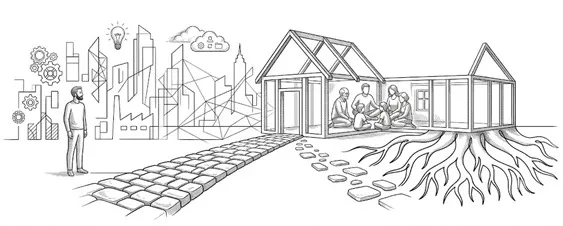
For succeeding generations, marriage has long been pictured in the imagination as a “golden cage”: an expression that carries something of the shadow of confinement, wrapped in stability. But have we ever stopped to ask how dangerous this label is? The phrase “golden cage” is not merely a social joke; it is a “linguistic bomb” that has seeped into our collective consciousness. For in the subconscious, the word “cage” suggests captivity, not safety; restraint, not stability. We have accepted calling our “solemn covenant” a cage, and we have settled for “gold” as compensation for the loss of freedom!
Today, amid the “sweeping rebellion” against the fitrah (innate human nature), we are witnessing a radical shift in how people regard this covenant. Many have shed the imagined “cage,” believing they were exercising absolute freedom, only to discover later that they had fallen into a “prison” without walls: the prison of loneliness, lost meaning and a disordered sense of identity.
Rebellion Against the Laws of the Universe
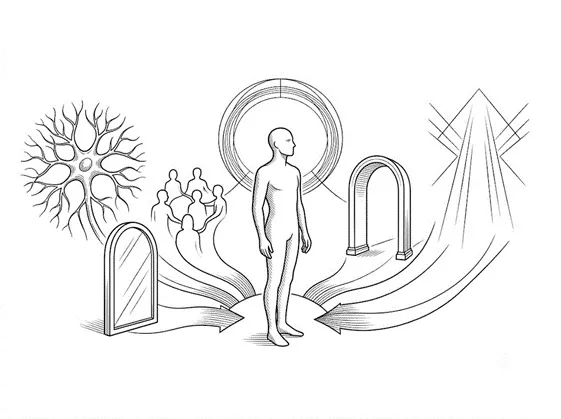
Pairing is not a random human choice; it is a law of cosmic balance that God placed in the very origin of existence. If we reflect on the nature of living creatures, we find striking examples of innate commitment: birds and other creatures build their lives on a partnership that is never broken, knowing by instinct that “scattered effort” means the extinction of their offspring. Human beings, by contrast, honoured with reason and freedom of choice, have used this gift to rebel against their own natural order. Modern man has been persuaded that his “self” is the centre, and instead of being a solemn covenant, marriage has become a passing “thrill-seeking experiment.”
The Deception of Absolute Freedom: The Shocking Language of Numbers
In societies that have reached the “peak of rebellion,” reality has turned into numbers that sound a warning. In the United States, the share of married adults has fallen from about 72% in the 1960s to under 50% today, and in the European Union the rate of formal marriage has roughly halved. At the same time, we see a sharp deviation from the fitrah: international research centres estimate an alarming rise in the proportion of those who adopt lifestyles outside the framework of the fitrah, reaching nearly 20% among some younger generations, driven by a legal and media cover that makes “rebellion” a mark of civilisation.
Our Arab Reality: Between the Siege of Costs and the Trap of Avoidance
Our Arab societies have not been immune to this influence; the signs of “reluctance to marry” have begun to rise at an alarming pace. In many Arab countries, social reports indicate that late singlehood among young men and women aged 30 to 40 has, in some societies, passed the threshold of 30% to 40%. This reluctance is not due only to economic conditions; it is the direct result of a collision between the “inflated costs of marriage,” which have turned it into a “luxury commodity,” and the “ease of alternatives” available in the digital sphere. This has created a state of “forced renunciation” of building a family, while at the same time feeding the rates of early divorce that now threaten to tear apart the social fabric.
Shock and the Loss of Meaning
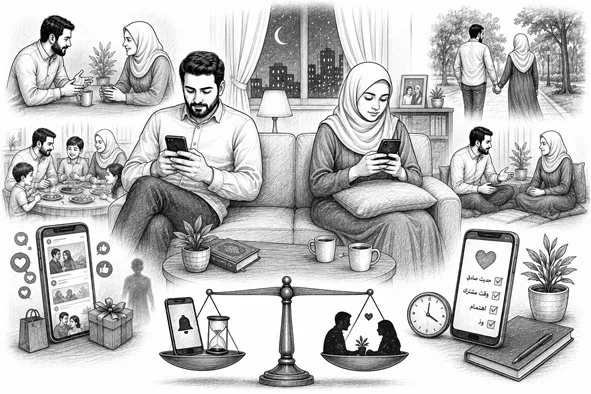
By behaving this way, we are assassinating the family with our own hands. Marriage is not a party for extravagance; it is a lifelong project that begins with sincerity of intention and clarity of vision. We have lost “meaning” amid appearances, and we have come to measure a partner’s worth by their ability to pay off our imagined “emotional debts,” not by their ability to be a haven of tranquillity (sakan) for us in the struggle of life.
In Conclusion: The Way Back
We do not enter cages to be imprisoned; we enter a “home of tranquillity” in order to live. A dwelling of tranquillity is a refuge that does not restrain the bird but protects it from the storms of chaos and loss. The time has come to reclaim our language and our understanding; a covenant founded on affection and mercy cannot be a prison. It is the widest space in which we find our true selves.
Marriage is the conscious decision to be saved; it is the commitment that confines in us nothing but the finest of what we possess, mercy and affection. And let us always remember: the success of a marriage is not measured by the splendour of its beginning, but by the spouses’ ability to write its pages day after day, in the ink of patience and mercy.
By Dr. Abdulqawi Al-Qadasi
Related service: Marriage counselling
Questions people hesitate to ask
Why should marriage not be called a golden cage?
The article argues that the word cage suggests captivity rather than safety and restriction rather than stability, as if the gold were compensation for lost freedom. Marriage is instead a refuge and a solemn covenant built on affection and mercy, a shelter from chaos and loss, not a prison.
Share your thoughts
Have you been through something like this, or has a question come to mind? Write it here. Your words may help another reader.
No comments yet. Be the first to start the conversation.