When Knowledge Advanced and Upbringing Receded
 Dr. Abdulqawi Al-Qadasi · 6 min read
Translated from the Arabic. Read the original (العربية)
We finished the syllabus… but what about building the human being?
In the last weeks of the school year, one question is asked again and again in schools: how much of the curriculum content is left? Has the mathematics teacher finished the prescribed units? Has the science teacher completed the required chapters? Is the revision done? And are the students ready for the exams?
These are natural and important questions; a school is responsible for teaching its students, and a school that does not do this competently has no value. But another question does not usually come up with the same force: what has happened to these students, in terms of upbringing, over a whole year? Have they become more responsible? Has the way they deal with one another improved? Have they learned to admit a mistake? Have they become better able to control their anger and to respect those who differ from them?
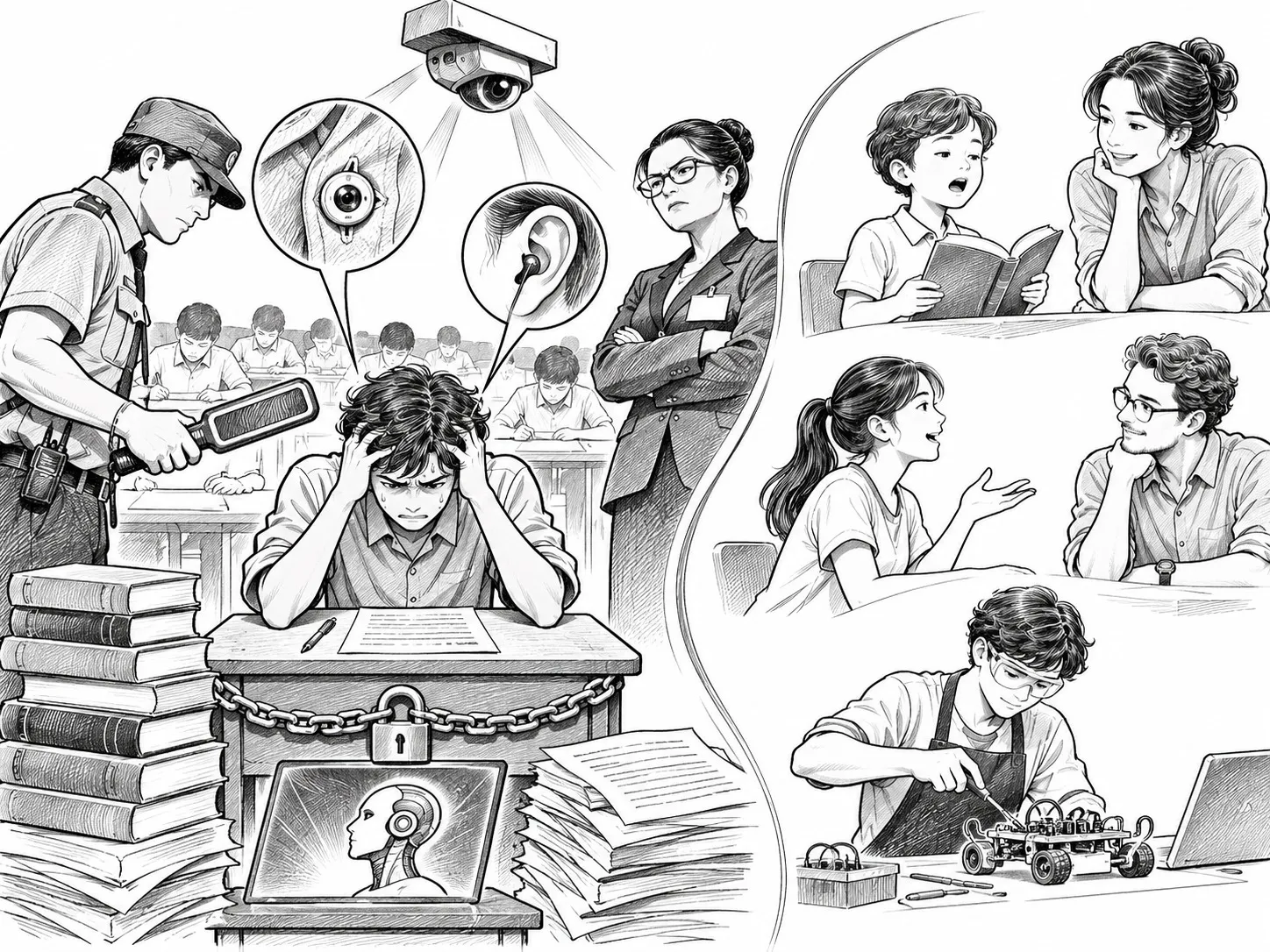
This paradox does not mean that the modern school rejects upbringing. Talk of values, character, responsibility and citizenship is present in the visions and mission statements of many schools. But teaching is more visible in the daily structure of the school. Every subject has a curriculum, every curriculum has a plan, every lesson has objectives, and then the exam comes to give the student a mark that can be recorded, compared and sent to the family. Upbringing does not always have this orderly presence; so it may become everyone's task in principle, yet a task whose degree of fulfilment nobody knows precisely.
Imagine a student who ends the year with high marks in mathematics, science and language, but who mocks a weaker classmate, disowns his responsibility when he errs, and treats the headmaster with perfect courtesy and the school's cleaner quite differently. He will carry his report home as a top student, and that is true as far as achievement goes, but the report tells us only part of this student's story. We have succeeded in teaching him many things, but whether we have succeeded in bringing him up needs another question and another measure.
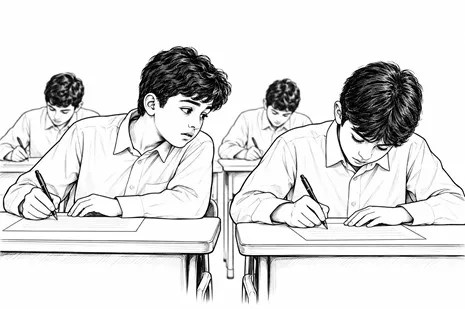
The paradox may appear most clearly in the exam itself. In Islamic Education the student studies that cheating is forbidden, and memorises the words of the Prophet (peace be upon him): **“Whoever deceives us is not one of us.”**¹ Then a question comes up in the exam: State the evidence that cheating is forbidden. He cannot recall the hadith, so he glances at his classmate's paper to cheat the answer from him: “Whoever deceives us is not one of us.”
Here the paradox reaches its peak. The student knew the value, and perhaps even earned the mark allotted to it, yet in that very moment he practised its opposite. This shows the distance that can separate teaching a value from bringing a child up in it.
The same happens outside the exam. Two students may quarrel in the corridor, and the teacher separates them and tells them to hurry back to class because the lesson has begun and the syllabus is behind. His conduct may be understandable, but he has walked past a precious moment of upbringing. In good time he could have found out the cause of the quarrel, helped the wrongdoer to admit his fault, helped the injured one to express himself without aggression, and helped both to get past the incident in a better way. Ten minutes like these may not appear in the record of syllabus progress, but they may stay in the student's character longer than much of the information he studied for the exam and then forgot.
The problem, then, is not that the school cares for knowledge, but that knowledge has become the part that is easiest to organise, follow up and hold to account. The teacher is asked: how far have you got in the book? The head of department is asked about the results in his subject, students' marks are compared, and pass rates are announced. But it is rare for follow-up on upbringing to be as clear and as continuous. With large numbers of students, pressure of time and the weight of exams, it is natural for the greatest effort to go to the task for which the teacher and the school will be held directly accountable.
I have known the school from several positions: as teacher, supervisor, consultant and administrator, and I have seen that many teachers carry a genuine desire to bring up their students, but the system itself does not always give this task the space it deserves. A teacher may know that one student's behaviour has changed, that another needs follow-up, that a third has begun to lose confidence in himself, but he stands before dozens of students, back-to-back lessons and a syllabus that must be completed. Here the question is not so much about the teacher's integrity or sincerity as about the place of upbringing in the very design of school work.
Indeed, we sometimes send the student two different messages without noticing. We tell him that cooperation is an important value, then make most of his success individual. We speak to him of initiative, then decide for him most of what he does. We teach him responsibility, then give him no real responsibilities in which to try things and bear the consequences. We ask him for honesty, then some schools' main concern at an official visit becomes appearing different from their ordinary days. And the student is very good at reading this contradiction; he learns not only from what we say but from what he sees happening before him.
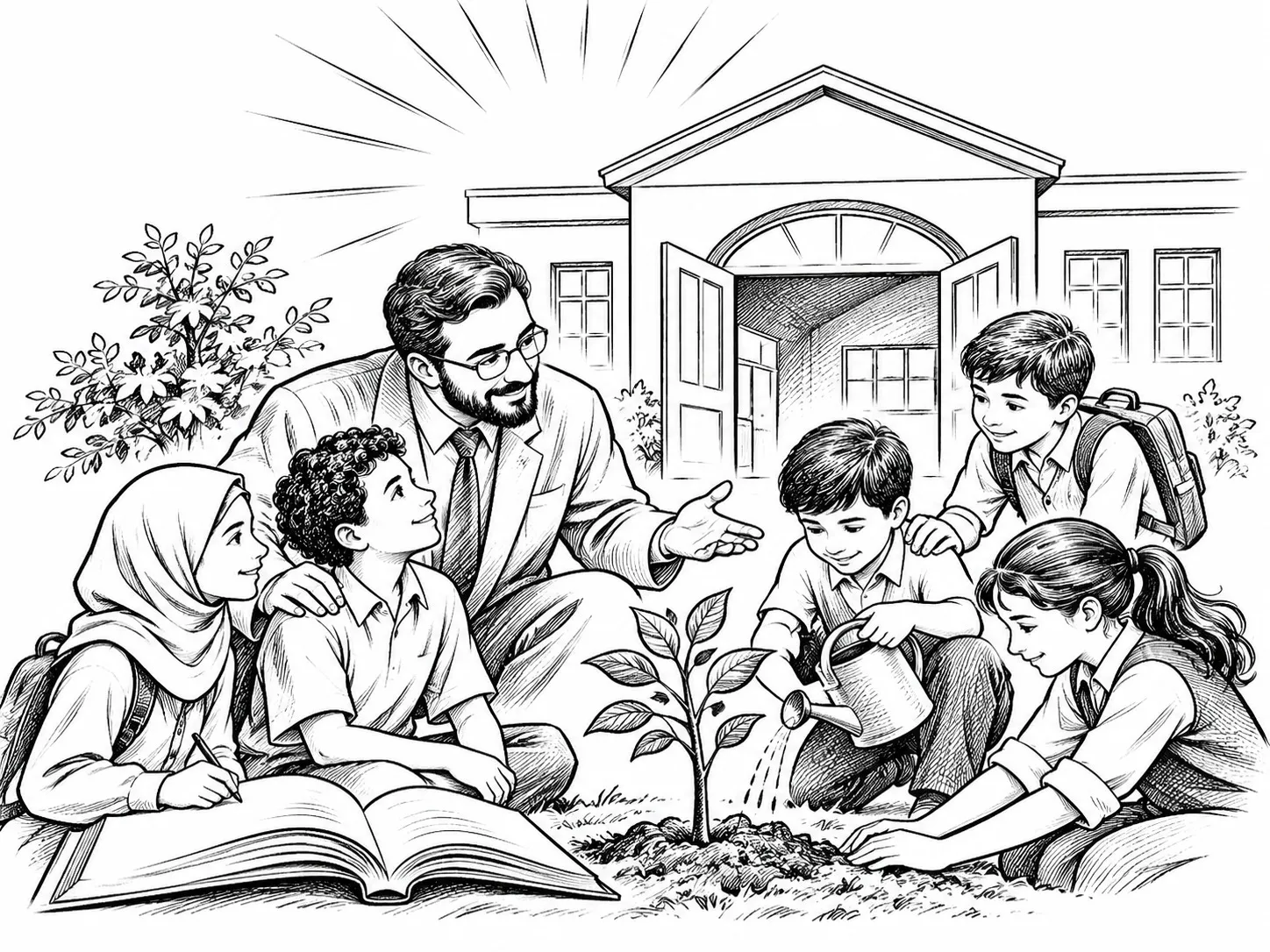
For this reason it is not enough to add a lesson on values or a book on ethics to the timetable and say that we have brought upbringing back to the school. A student can score a hundred in the values subject and his behaviour stay as it was. Upbringing requires the school itself to become a space for practice: the student is given real responsibility, is held to account when he errs without being humiliated, is encouraged when he admits his mistake, and learns how to disagree without aggression, how to win without conceit, how to lose without abuse, and how to treat those weaker than himself.
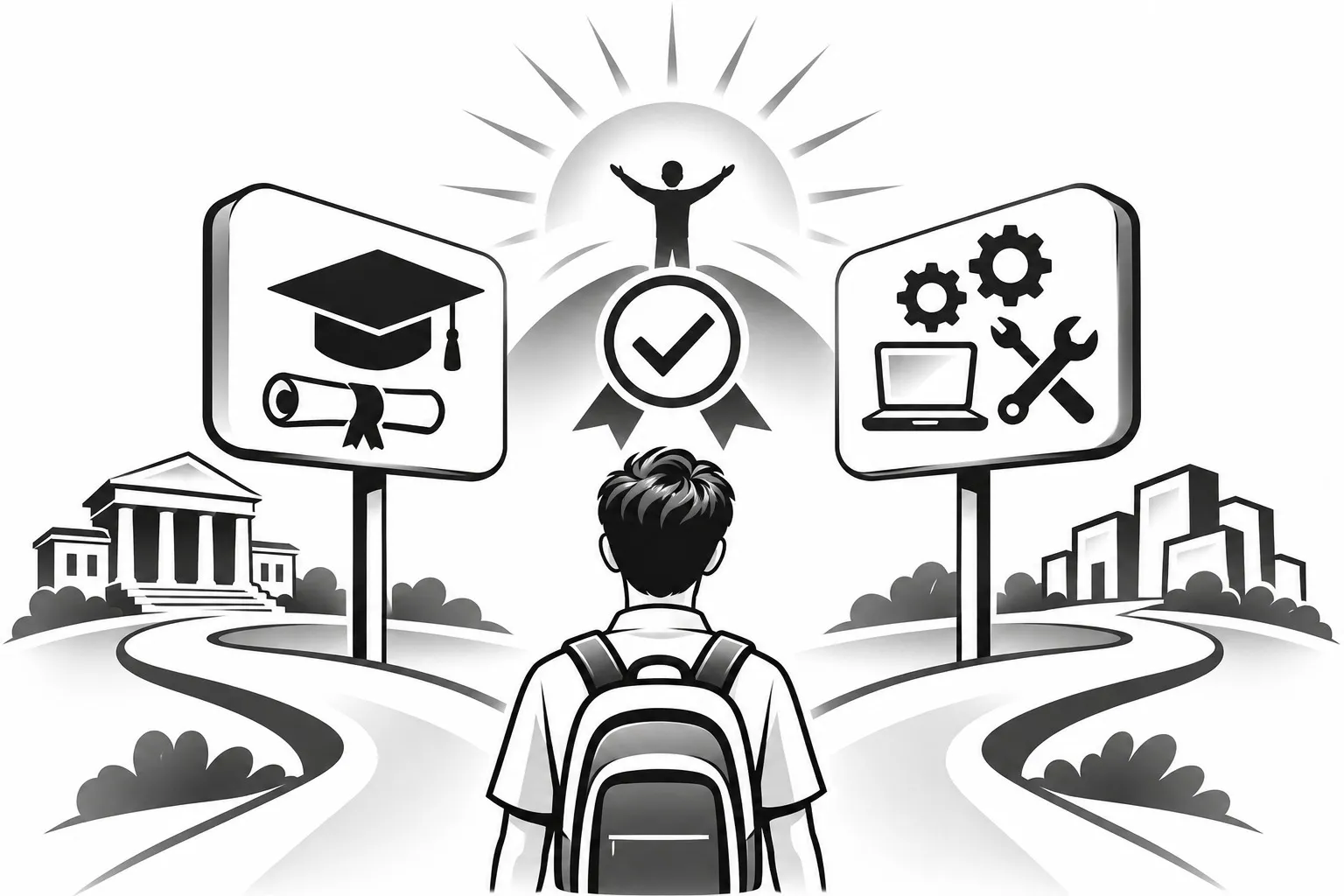
This is not a call to neglect academic achievement, but to redefine success more broadly. We need a scholar master of his knowledge, a skilled doctor, a creative engineer, an outstanding programmer; but knowledge, intelligence and skill can be used to build, and they can be used to harm people. For this reason it is not enough to ask how much intellectual power the school has given the student; we must also ask about the human being who will carry this power, and how he will use it.
This question accords with contemporary educational trends in which interest has widened in social and emotional skills, among them responsibility, self-control, cooperation, empathy and perseverance, as important aspects of the learner's growth and life, not separate from his educational task.²
Teaching gives a person knowledge and ability; upbringing helps to direct that knowledge and ability. We are not asked to choose between them, nor to take time from science and mathematics to fill it with sermons. What is asked is that we recover the question of upbringing within everything the school does: what the student learns, yes; but also what this learning, this environment and these long years do to his character.
At the end of the year, the school can say precisely: we finished the syllabus.
And the most important question remains:
What have we built in the human being?
References
- Muslim ibn al-Hajjaj, Sahih Muslim, Book of Faith, chapter on the Prophet's (peace be upon him) saying, “Whoever deceives us is not one of us,” hadith 101.
- Organisation for Economic Co-operation and Development (OECD), Social and Emotional Skills for Better Lives: Findings from the OECD Survey on Social and Emotional Skills 2023 (Paris: OECD Publishing, 2024).
Related service: Parenting and education counselling
Questions people hesitate to ask
What is the difference between teaching a value and raising students on it?
Teaching a value means the student knows it, memorises its evidence and may earn its marks; upbringing means practising it in behaviour. One example is a student who cheats on a question about the prohibition of cheating, copying the hadith whoever cheats us is not of us, which shows the distance between knowledge and conduct.
Why does upbringing recede in schools behind academic achievement?
Because knowledge is easier to organise, track and account for: each subject has a curriculum, a plan, an exam and a grade, and teachers are asked how far they have got in the book. Educational follow-up is rarely as clear, and with many students and time pressure, effort goes to what teachers are directly held accountable for.
Share your thoughts
Have you been through something like this, or has a question come to mind? Write it here. Your words may help another reader.
جزاك الله خيرا دكتور عبد القوي بالفعل بناء القيم لا بد ان تكون رديفة تزويد العلوم لابنائنا الطلاب وتموضع بناء القيم والاخلاق في مناهج الدراسة التقليدية يتم ادماجه بواسطة المعلم الناجج الناصح الغيور.
جزاك الله خيرا دكتور عبد القوي بالفعل بناء القيم لا بد ان تكون رديفة تزويد العلوم للابنائنا الطلاب وتموضع بناء القيم والاخلاق في مناهج الدراسة التقليدية يتم ادماجه بواسطة المعلم الناجج الناصح الغيور.