When the Learner Burns Out
 Dr. Abdulqawi Al-Qadasi · 7 min read
Translated from the Arabic. Read the original (العربية)
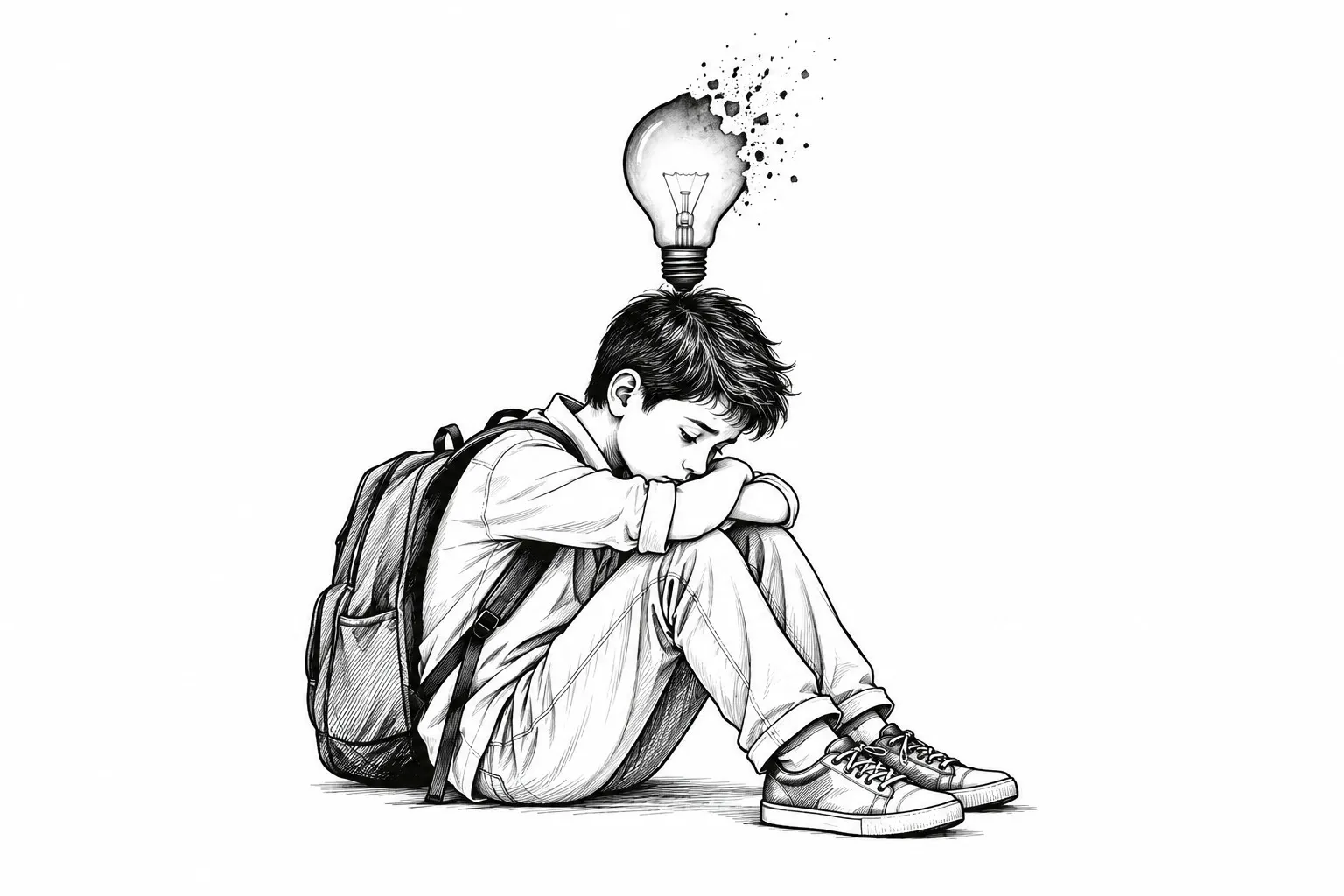
From passion to withdrawal… what happened along the way?
Many children begin their journey with knowledge with clear curiosity. They ask about things, try them out, and are delighted when they discover something new. They may wear out their parents and teachers with their many questions, not because they want to annoy them, but because to them the world is a wide space for discovery.
Then years pass, and we find some of these children waiting for the lesson to end, putting off their homework, staying away from school whenever they can, and perhaps some of them reaching the point of withdrawing from education itself. Between the child who asked about everything and the learner who no longer wants to know, something happened that deserves our attention.
Not all boredom is a problem, and we should not expect the learner to be enthusiastic in every lesson and every day. Some learning requires patience and perseverance, and some tasks are necessary even if they are not enjoyable. But the problem begins when passing boredom turns into a lasting disconnection from learning: the learner attends in body and does the minimum required of him, while his interest left the school long ago.
At that point it may be easy to describe him as lazy, careless or poorly motivated. But these descriptions do not explain what happened to him, and they may make the problem more complicated. It is more useful to ask: when did he begin to lose interest? And what happened in his school or family life for him to reach this state?
Behind withdrawal there may be repeated experiences of failure, a subject whose meaning the learner cannot see, a path that does not suit his abilities, a strained relationship at school, bullying, family and social pressure, or a long feeling that however hard he tries he will not succeed. What we call "poor motivation" may be the result of a deeper problem, not its cause.
Educational studies on school engagement help us understand this issue more broadly. The learner's relationship with school is not determined by his grades alone; it is shaped together by his participation in activities, his feelings towards the school, and the degree of his mental engagement in learning. Understanding a learner's withdrawal therefore requires looking at these aspects together, not reducing the problem to a single personal trait.
I remember a situation I lived through myself, which made me realise how a learner's burning out can begin with a word that may seem passing.
A female student moved to an international school and a new learning environment, and at first she was having difficulty adjusting. In one mathematics lesson the teacher said to her in front of her classmates: "You will not pass this year."
Perhaps the teacher did not mean to hurt her, but he did not realise what this sentence could do to a learner who was already trying to find her place in a new environment. The student was deeply affected, began to lose her self-confidence, and then chose to stay at home and not go to school.
When I noticed her absence and contacted her father, I learned what had happened. I spoke with her at length and tried to help her not to let a judgement said to her in a moment become a final judgement on her abilities and her future. I assured her that the difficulty she faced today did not mean she could not overcome it tomorrow. I also spoke with the teacher and explained the effect of his words, without assuming that he had meant to hurt her.
The student returned to school, began to adjust again, and at the end of the year achieved a grade of distinction.
This situation stayed in my memory because it made me see, in a tangible way, that what sometimes looks to us like poor motivation may have a story behind it that we do not know. This student did not need more pressure; she needed someone to restore her confidence that she could do it.
A teacher may say a word and move on with the rest of his lesson, while the learner carries it home with him, and perhaps much further than that.
This does not mean that we hold the teacher alone responsible for every frustration that befalls the learner, or that we make encouragement a substitute for frankness and assessment. It is the teacher's duty to show the learner his weak points, to demand effort from him, and to set appropriate challenges before him. But there is a big difference between saying to a learner, "Your current performance needs improvement, and you can make progress if you work on these areas," and passing a final judgement on him that he will not succeed.
The first describes a performance that can change; the second may turn, in his mind, into a judgement on his ability, his worth and his future.
For this reason the school should pay attention to the signs of withdrawal while they are still small: a learner who used to take part and has fallen silent, whose participation has begun to decline, whose absences have increased, or who keeps saying things like "I can't" and "What's the point?" We are not required to give every change a psychological interpretation, but a school that knows its children can notice that something has changed, and ask before it judges.
In our educational heritage we find an early awareness of the danger of turning learning into a repellent experience. In his Muqaddimah, Ibn Khaldun warned against excessive harshness towards learners and the effects it leaves on their souls and behaviour. He also stressed the importance of gradualness in teaching and of taking account of the learner's capacity. When we constantly place a person before what exceeds his capacity without support, or make him live the same experience of failure year after year, we are not only testing his ability; we may be reshaping his whole relationship with learning.
Sometimes the problem may lie in the educational path itself, not in the learner.
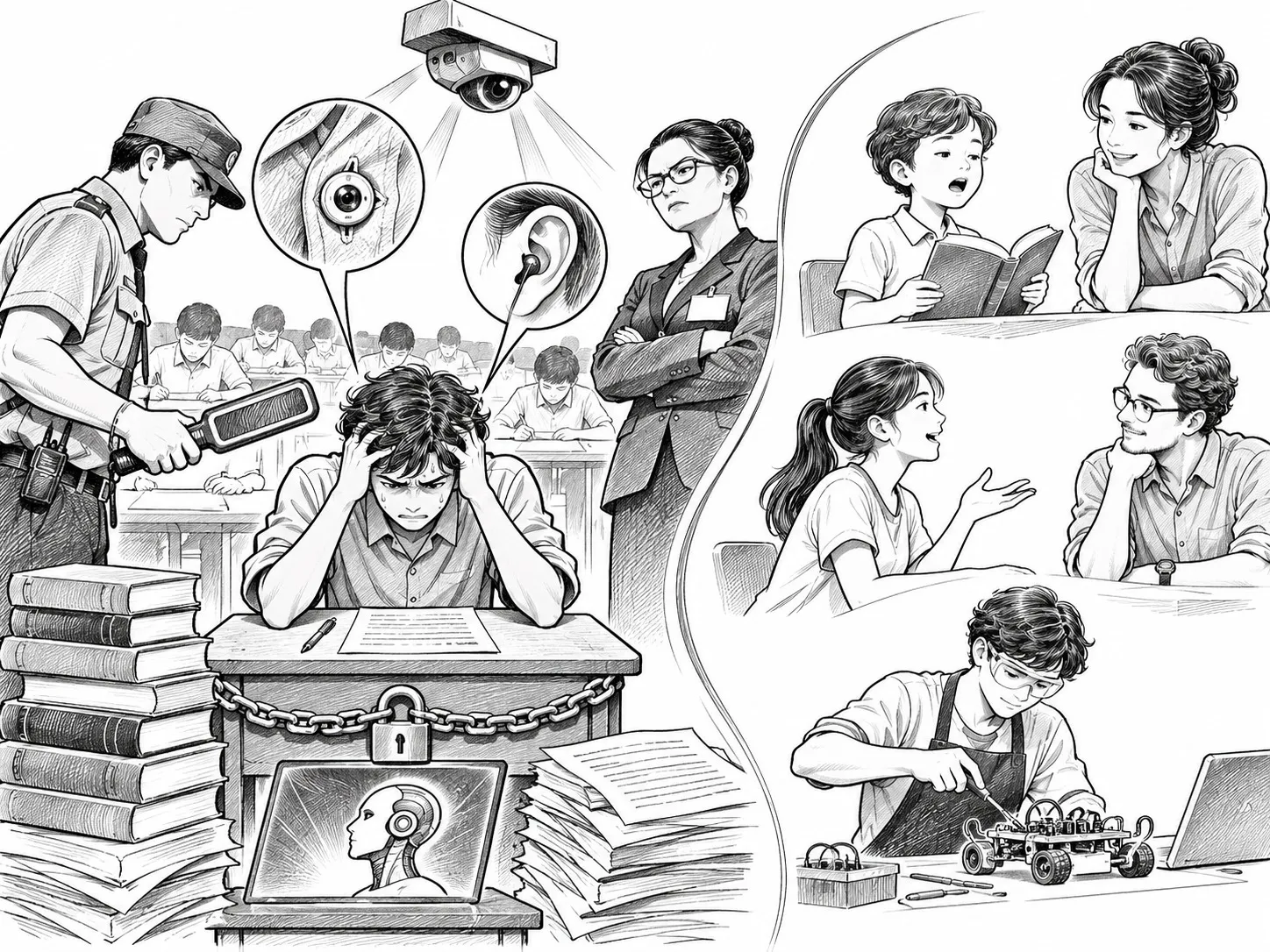
We assume that all our children should stay on the same academic road, progress at the same speed, and succeed by the same measures. If one of them does not fit this road, he begins to feel that he is the problem, while he might flourish if he found vocational, artistic or technical education, or an applied path that suits his inclinations and abilities.
Some of those we describe as "burnt out" may not have lost the desire to learn; they have lost the desire for the only road to learning we made available to them.
Here flexible pathways become part of protecting both motivation and dignity. A learner who discovers that he is skilled in electrics, design, agriculture, programming or trade should not feel that choosing this path is a declaration of academic failure. Society needs diverse abilities, and success should not be reduced to one kind of certificate or profession.
This does not mean hastily steering learners who face academic difficulties towards vocational paths, as if these were a refuge for those who did not succeed elsewhere. These paths too require aptitudes, abilities, knowledge and skills, and they should be positive choices based on inclinations and competencies, not disguised punishments for weak attainment.
When education recognises the diversity of abilities and roles, the learner can see before him a future worth striving for, instead of spending years trying to reach a future that others chose for him.
The school cannot, of course, address all the causes of burnout; some of them may come from the family or from economic, health or social circumstances. But the school can avoid adding to the problem, and can be the place that notices the learner and listens to him before judging him. Here the importance of integration between family, school and society appears; when these parties work in isolation, it becomes easy for some children to fall through the gaps between them.
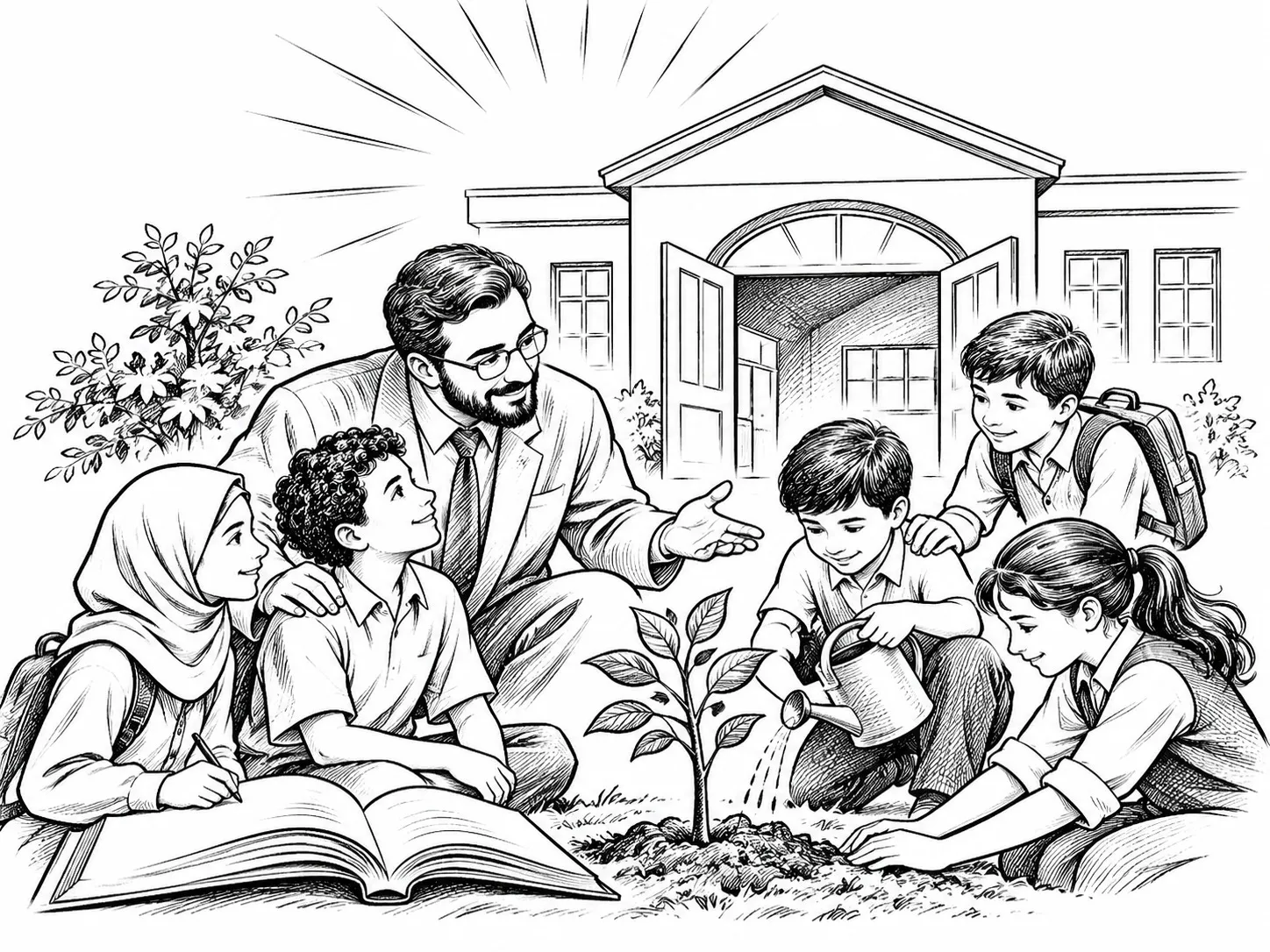
We need schools that do not merely monitor attendance, absence and grades, but also pay attention to the learner's relationship with learning itself: schools that know that behind every decline there is a story worth understanding, and that restoring confidence may sometimes be the first step towards restoring attainment.
So when a learner falls behind or withdraws, perhaps our first question should not be: what is wrong with him? But a fairer and more useful question: what happened to him? And what happened around him?
What is needed may not always be to push the learner by force back to the place where he burnt out, but to understand why he burnt out, look for the spark that is still in him, and then open before him a path along which he can set out again.
An article drawn from the book "The Learner: From the Life of School to the School of Life" by Dr. Abdulqawi Al-Qadasi, 2026.
Related service: Parenting and education counselling
Questions people hesitate to ask
Why do students lose interest in school?
The article says withdrawal may come from repeated failure, a subject whose meaning the student cannot see, a path that does not suit his abilities, a strained relationship at school, bullying, family and social pressure, or a long feeling that he will never succeed. What we call poor motivation may be the result of a deeper problem, not its cause.
What are the signs that a student is withdrawing from learning?
The article lists early signs to watch for: a student who used to take part and has gone quiet, declining participation, more frequent absences, or repeated phrases such as "I can't" and "What's the point?" A school that knows its students notices the change and asks before it judges.
How can a teacher's words affect a student?
The article tells of a student whose teacher told her in front of her classmates "You will not pass this year", after which she stopped going to school; with support and conversation she returned and earned a distinction. It distinguishes between "your current performance needs improvement, and you can progress", which describes a changeable performance, and a final verdict that can become, in the student's mind, a judgement on his ability, worth and future.
Share your thoughts
Have you been through something like this, or has a question come to mind? Write it here. Your words may help another reader.
No comments yet. Be the first to start the conversation.